Earth Overshoot Day (EOD) is the date in any given year reflecting when human consumption of Earth’s natural resources has depleted more than the Earth can regenerate in a year.
In 2020 Earth Overshoot Day falls on August 22, more than 3 weeks later than in 2019 due to COVID-19 lockdowns around the world.
EOD is calculated by the Global Footprint Network by dividing the world’s biocapacity (the amount of natural resources generated by Earth that year) by the world’s ecological footprint (humanity’s consumption of Earth’s natural resources that year) and multiplying by the number of days in the year.
The footprint calculator will tell you based on your responses when in the year personal “Overshoot Day” falls – meaning, when would Earth Overshoot Day fall if everyone lived like you? The author of this post got Nov 21 as her personal “overshoot” day. Let us know how you did!
After you’ve taken the quiz, think of an action or two you can realistically take to reduce our collective ecological impact. GreenATLiens recommend applying pressure on our elected officials to transition to 100% renewable energy! Incorporating more plant-based meals into one’s diet or adding a car-free day to your week are great morale-boosting individual actions to take, but remember this is bigger than any individual and we need systemic change to solve systemic issues!
HB 901 has passed the Georgia House AND Senate and now approaches Governor Kemp’s desk. The passing of HB 901 would empower local governments and non-governmental entities to take out loans to improve local water quality, protect vulnerable communities from floods, protect wildlife including endangered and threatened species, and fund outdoor recreation programs. In line with cries heard nationwide for a Green New Deal, the passing of HB 901 would support efforts to create green jobs in Georgia.
HB 302, 937, & SB 172 – Regulating the Zoning, Construction, and Design of Local Residential Properties
HB 937 seeks to prevent local communities from regulating building materials or construction practices currently approved in the state’s minimum standard codes. If this bill passed, the City of Atlanta would be prohibited from passing local green infrastructure ordinances that could reduce our metro areas’s carbon emissions and reduce local temperatures and their accompanying effects.
According to the Georgia Conservancy:
“These three bills have the potential to hinder, if not completely remove, innovation at the local level to address needs or leverage assets related to natural resources, housing, revitalization, or other land use conditions.”
All three bills have been deferred to the next legislative session.
HB 927 and SB 426 holding facilities accountable for ethylene oxide use linked to recent uptick in cancer
HB 927 and SB 426 would require written notification within 24 hours of a unpermitted release of ethylene oxide gas to the to Georgia Environmental Protection Division. The EPD website would then by law be obligated to make this information publicly available. Ethylene oxide, used to sterilize medical equipment, has been linked to a recent uptick in cancer reports in communities near facilities that release the gas beyond quantities permitted by the state. Georgia currently has eight facilities that use ethylene oxide.
HB 927 has been tabled until the next session. SB 426 has passed the Senate and the House and now awaits approval from the Governor.
This bill proposes changes to the current Right to Farm Act. The Right to Farm Act protects farmers from nuisance lawsuits being filed against them, the current law states that such lawsuits must be filed within 4 years after said nuisance allegations come forward, but the new bill would change that to within 2 years.
Georgia Conservancy opposes this bill, believing that the current Right to Farm Act already successfully protects farmers from nuisance lawsuits. Other environmental concerns are that the new law would favor large livestock centers over small farmers and create loopholes for them to get away with land, air, and water pollutants released from their operations. The Georgia Farm Bureau, who supports this bill, responds to this by maintaining that polluting natural resources is illegal for any farm, and the Right to Farm Act only protects against nuisance lawsuits for farms operating legally. Any violation of current environmental standards or the other laws are still subject to prosecution under both the current Right to Farm Act and proposed changes. HB 545 has been deferred to the next legislative session.
In 2018, the Trump Administration opened Georgia’s coast to offshore drilling and oil exploration through seismic drilling. This resolution is a bi-partisan opposition to oppose this exploration for oil here in Georgia and instead maintain our coastal ecosystems and support coastal tourism and fishing industries. It is following the passing of a similar resolution in the House in 2019. The bill did not come up for a vote this session but Georgia Conservancy supports this bill and hopes to work with legislators to reintroduce it in the next session.
This bill would create and establish carbon credits that can be purchased by developers looking to offset their carbon footprint. This would be tracked through a carbon registry housed at the State Forestry Commission. The bill was amended to include the establishment of a Sustainable Building Material Carbon Sequestration Technical Advisory Committee to establish a baseline of what these carbon sequestering materials and practices would be and how they would be determined. Participation in the registry is voluntary for companies. HB 1015 has been deferred to the next legislative session.
Greetings ATLiens! This week our #motivationmonday feature is local chef and locavore expert, Julia Schneider! You may recognize her if you ever frequented (pre-COVID) the Ponce City Market Farmers Market by CFM where she has been a featured Chef. She is a private chef and also works with Moveable Feast ATL, a local catering company. COVID of course has her changing gears a bit and these days her Instagram is filled with all kinds of mouthwatering baked goods and other treats.
Originally from Michigan, she grew up cooking mostly Eastern European food with her adoptive grandmother, though her parents avidly grew food they were not very into cooking. She didn’t enroll in culinary school until her move to the ATL in 2009, but even then found that the best training was directly from the industry itself and moved on to start working with Octane in 2010. She was in charge of the food at all their locations and eventually their catering. In 2017, she began working with CFM as a Market Chef and doing private chef work. Her favorite part about working and living in Atlanta is the community. She connected with the founders of her current venture, Moveable Feast ATL, through work contacts that are also dear friends. She finds the strong locavore community and access to incredible locally sourced food in ATL to be one of the gems of this city.
As a chef diving into at home quarantine baking projects, Julia is not just a chef, she also represents a consumer in this climate conscious world. Julia says that climate is always something she is conscious of when preparing food for private clients or doing things at home. In her own kitchen she makes sure to use reusable containers, source from as many local farms as possible, and use as much of the ingredients as possible, including cooking with scraps. Some of her favorite places to source local ingredients are:
Freedom Farmers Market
Woodland Gardens Veggie Box
Georgia Organics Veggie Box with pick ups at Wrecking Bar
Freewheel Farms online pre-order
Levity Farms online ordering and pickup (both in town and in Roswell pickups available)
Chop Shop
Evergreen Butcher and Baker
Her call to action for ATL’s Green Foodies? It is way easier to eat local than you might think it is. Her advice is to take advantage of the Georgia summer fruits, if you peep her instagram @parkmeejung you will see delicious strawberry poptarts and pies.
End up with a bunch of random local foraged veggies like mushrooms and greens? Keep it simple! A big bowl of pasta, butter (or olive oil to keep it vegan friendly) and a little lemon juice. Let the veggies do their thing. Julia believes cooking for people is a way to show love and friendship, so until we can all get back out and safely enjoy market taste tests again- follow along with her and get some inspiration on how you can bring local food to those you love!
Meredith is GreenATLiens’ Foodie ATLien writing and reporting on all things sustainable food systems in Atlanta. She is an actor and a low-waster transplant originally from Cincinnati, OH. She will likely talk your ear off about locally grown food, carbon emissions, or animal welfare. But when she is not, she can be found hiking with her dog, kayaking, or riding her horse. Her latest obsession is the connection between growing your own food and the rich fertilizer that is manure. In short, she’s trying to grow tomatoes out of horse poop. She also does stand up comedy.
Today is World Population Day. Why does it exist? To raise awareness of global population issues. Let’s be clear, in terms of climate change the issue is not population but how we support our population. Population growth necessitates that we adapt our systems so that we collectively will produce less and not more greenhouse gases. Remember, the effects of climate change are going to be felt in the South first before it starts to affect our neighbors north of us.
And we’re already seeing those effects: our agriculture industry is already seeing crop failures as a result of climate change and our Atlantic coastline has incurred millions of dollars in damages from tropical storms intensified by climate change (source). But before we get off topic, here’s some quick info about Atlanta’s growing population:
According to the Atlanta Regional Commission the Atlanta Metropolitan area population increased from 2018 to 2019 by 72,500. Now that number may seem small compared to our total population of 4.6 million but we have to take into account the resources needed to support that population increase:
Housing for 72,500 additional people, not to mention our preexisting estimated 3,000 homeless (source). Experts have already predicted a housing crisis in 2020 (source).
Electricity, water, and gas for said homes. Fulton County is expected to require more than 300 million gallons of water per day by 2035 (source). ATL is dependent on surface water, which means we are already constantly teetering on the edge of drought. which we were in last year.
Jobs. Doesn’t Georgia want all their residents to be happy little tax-payers? In May it was reported the state as a whole has a 9.7% unemployment rate which was actually an IMPROVEMENT from 12.6 in April (source)! Zoom into Atlanta and we have a 12.3% unemployment rate (source). We need a Green New Deal!
Transportation. Owing to much of Atlanta being fully car dependent, imagine adding 72,500 cars to the roads. Or suppose a more conservative estimate, that the 72,500 are all nuclear families and it’s only adding about 20,000 more cars to the road. We need INVESTMENT in rail that can allow suburban commuters to simply park at their suburb’s MARTA station and ride the train in to Buckhead, Midtown, Downtown, or wherever it is they work. Beltline Rail Now’s proposal of investing in a rail line along the Atlanta Beltline is another way of connecting commuters and people living in the city to modes of transport that are good for people and planet. On the bright side, Atlanta just last year approved a $2.7 billion MARTA expansion plan that includes 29 miles of light rail, 13 miles of bus rapid transit lines, the renovation of existing stations and other improvements. But what gives that the construction of the new rail lines are delayed until 2025… (source).
Food. People eat it. Due to high levels of food waste the issue isn’t growing or importing enough food but rather curbing food waste through education and outreach to connect low income households to fresh food. Concrete Jungle, Everybody Eats Atlanta, Free Food Commune, Goodr Co, Umi Feeds, and others are already doing this critical work, and they need our support now more than ever.
Waste Management. More people means more waste, more land use set aside for landfills, more low income communities suffering from toxic fumes off-gassed from neighboring landfills, and that we’ll need to increase the capacity of our municipal recycling system. Systemic change in product packaging (looking at you, Coca Cola) is one step towards alleviating our waste management burdens, and advocating for more landfill gas projects that will harvest methane offgassed from existing landfills and repurpose it as natural gas to use in our homes are both good ways to move forward. Georgia already has 5 such landfill gas projects operating in the state.
Slide from Georgia Climate Conference 2019
Did we cover all our bases here?
Basically what I’m saying is either way we’re about to slide. Either we’re going to slide deeper into dependence on fossil fuels and see existing issues like environmental injustice, droughts, air pollution, traffic, food insecurity, and homelessness worsen or we’re going to slide deeper into breaking free from fossil fuels and putting people and planet first. (Totally just used this opening line so I can add Toosie Slide to the GreenATLiens playlist :D)
Atlanta is the 4th-fastest growing population in the country behind Dallas, Houston, and Phoenix (source, source). It is especially critical that we adapt not only for our own resilience and prosperity but also to serve as a leading example for other cities and towns breaking free from fossil fuels and honing in on truly sustainable development.
Notice that Atlanta is always a big purple/red blob denoting higher than average population growth, because who wouldn’t want to live in the A amirite?
Unpopular opinion- I hate fireworks. There, I said it. I’ve never liked them, when I was little I could never get over the giant booms and the overall thought that the sky must be falling. Everyone around me would say, “but look at the pretty colors!” … to which I wish I would have responded, “Oh wow, gee, thanks for reminding me, totally didn’t notice how pretty it was while fearing for my life.”
So maybe I am a buzzkill but I think many of you following us here at GreenATLiens agree that this year’s Independence Day amidst the headlines of police brutality, climate injustice, global pandemic, and children in cages is cause for pause, or maybe a full stop. This year as we reflect on all that it means to be “American” and celebrate our “Independence Day” (read: the independence of slave-holding, misogynistic white men), I say we also take some time to understand that the “celebrating America by blowing things up” idea has pretty devastating impacts to our environment and biodiversity surrounding us.
The above graphic, created by Andy Brunning in The Chemistry of Firework Pollution for Compound Chem, clearly breaks down the chemicals used to create this explosive artwork, and how those chemicals and other materials can have negative effects on the world around us.
According to Terrapass, there are ways to make your annual fireworks displays a little more eco-friendly, even making them completely carbon neutral through the purchase of carbon offsets. The New Year’s Eve Firework display in Sydney, Australia has achieved total carbon neutrality by encouraging public transit, recycling leftover waste, and purchasing carbon offsets to balance out the pollution left in the air.
But what about noise pollution? The devastating effects fireworks have on local wildlife? The danger for wildfires in those habitats from shoddy at home firework displays? The use of fireworks has been known to cause serious disturbance in the habitats of birds, small vertebrates, invertebrates and mammals. The possibility of resulting brush fires, even ones that are small and easily contained, still destroy the living spaces of many of these creatures and their established eco-systems. The fear and panic caused by loud noises can cause birds and mammals to leave their nests and become disoriented and unable to return, leaving their young unprotected (source).
We can see evidence of this in our own domesticated animals. Fireworks have a very high decibel level in the boom, as much as 190 decibels, more than a gunshot or even some jet engines. We know that many animals, including dogs and cats have a much more sensitive sense of hearing than humans, meaning they are at much greater risk for hearing loss or tinnitus from firework sounds (source). And additionally, many animal welfare professionals will tell you that July 5th is one of their busiest days of the year when it comes to stray animals. If you follow any of our local animal welfare organizations here in Atlanta, you will have seen their posts recommending that you keep your dogs and cats inside. Firework noise, summer storms, and other factors all contribute to a higher level of stray animal intake throughout the summer, which reaches a maximum around this time. Here you can find a list of helpful tips to keep your pets safe and prevent them from getting lost around this time. Because of the higher amounts of animals needing care in shelters at this time of year, many shelters are operating at or over capacity and are offering low-cost adoption events or promoting fostering.
So, all I am saying is, maybe this year you mix up your usual Fourth of July celebrations. Foster a dog or cat, go for a nice walk to observe your local biodiversity, or watch Hamilton! And if you really need a little flair, go outside with some sparklers, just make sure you properly dispose of all the pieces!
Meredith is GreenATLiens’ Foodie ATLien writing and reporting on all things sustainable food systems in Atlanta. She is an actor and a low-waster transplant originally from Cincinnati, OH. She will likely talk your ear off about locally grown food, carbon emissions, or animal welfare. But when she is not, she can be found hiking with her dog, kayaking, or riding her horse. Her latest obsession is the connection between growing your own food and the rich fertilizer that is manure. In short, she’s trying to grow tomatoes out of horse poop. She also does stand up comedy.
After the recent whirlwind of police killings of victims George Floyd in Minneapolis, MO, Breonna Taylor in Louisville, KY, and Rayshard Brooks in Atlanta, GA, there has been an increasing call from the people to defund police departments that have been the perpetrators of brutality, violence, and murder against black people for centuries in the United States.
The people of Atlanta have mobilized numerous times to march and demonstrate in downtown Atlanta and beyond to defund the police, stop police brutality, end voter suppression, and dismantle the prison industrial complex. Especially considering that Rayshard Brooks was the 48th police shooting the Georgia Bureau of Investigation investigated in 2020 (Mainline Zine). In response to rising public sentiment to defund APD, Mayor Bottoms met with and Atlanta City Council June 15th to respond to public calls to revise the budget. Essentially, the amendment to defund APD by 50% was shot down and members of City Council -most vocally Antonio Brown of District 3 where Rayshard Brooks was killed by APD – have been calling on constituents to call into virtual City Council meetings to demand the City defund APD by 33% or 73 million to reimagine safety. In reimagining safety Brown is possibly subtly referencing a viral infographic that was circulating on social media:
Infographic from KnowYourMeme.Com
Since the 2021 Atlanta City Budget has remained unchanged, we at GreenATLiens thought you’d might like to know a few things that got defunded in order to increase the APD budget by over $12 million.
What did the City of Atlanta defund for 2021?
Please keep in mind this is not an exhaustive list. The full PDF of the 2021 Atlanta City Budget can be found here. GreenATLiens is also interested in examining how these particular instances of defunding not only harm the environment but also harm the black community, or in other words are concrete examples of systemic environmental racism.
Department of Public Works defunded from $51.7 million in 2020 to $0 in 2021. Public Works is responsible for maintaining infrastructure, so if there’s any broken bridges or crumbling historic buildings they’ll have to apply for a grant or rely on community donations to fund infrastructural renovations.
Built environment is an incredibly valuable aspect of sustainability. Preserving buildings and infrastructure helps us make things last for as long as possible and reduce the use of new resources. Built environment preservation helps reduce activity that contributes to climate change, essentially.
Defunding the Department of Public Works also disadvantages predominantly black neighborhoods in Atlanta, particularly Historic West End with historic buildings in need of renovation. The Atlanta Budget is essentially saying “You won’t get a cent from us, go have a fish fry to raise the funds cuz we ain’t helpin’.” The budget for Public Works in 2021 is literally $0! *Rubs eyes* Yep, still $0!
2. Department of Parks and Rec is being defunded by $1.6 million (2.4%) in 2021. Not only that but they’ll also lose 33 personnel (see below or budget page 70).
Parks as green spaces naturally are beneficial to the environment, specifically as urban wildlife habitats, carbon sequestration in the form of trees, water pollution reduction through plants that retain and prevent stormwater runoff that carries toxins into storm drains and ultimately our drinking water.
Parks are also highly important for maintaining public health. They provide a community green space to run, jog, play sports, or otherwise exercise, as well as improve one’s mental health through nature therapy and release of endorphins from physical activity and sun exposure. Defunding Parks and Rec means that communities lacking access to greenspaces are less likely to see any park development in the coming year. Wait, the budget says.
Screenshot of the Atlanta City Budget’s summary of personnel showing that APD will have an increase in personnel of 229, while Parks and Rec will lose 33 personnel, Watershed Management will lose 25, Human Resources will lose 9 and Department of Audit will lose 2.
3. The budget literally defunded justice. Atlanta’s Judicial Agencies got a 2.74% budget cut of $367K, so judges will be more overrun with cases than before. If you believe the Criminal Justice System and Prison Industrial Complex can be reformed, then defunding the courts that give Atlantans trials is a blow to justice and a disservice to the people.
Filling up prisons with black people for offenses white people get off easy for is another example of environmental racism. It keeps people out of the workforce and out of the voting pool to suppress black voters and keep black families economically destabilized without two members of household to contribute to household income and the work of running a household. Holding people in cages and forcing them to perform unpaid labor while leaving their families to fend for themselves is a modern form of slavery and oppression. A fair and non-corrupt justice system would end this continued disservice to Atlantans.
4. The Department of City Planning was defunded by $1.6 million (7.33%). Defunding City Planning means defunding walkability and bikability in Atlanta. Defunding City Planning is an example of systemic environmental racism and here’s why:
Poor urban mobility, meaning a poor ability to get around without full dependence on a car, is a systemic factor that makes it more challenging for low-income communities to get around to places like a job, the DMV, a poll location, or the grocery store. It’s essentially a way of keeping wealth in the communities that have wealth and denying low-income communities access to that wealth. Additionally, for those who do decide to walk or bike to access opportunities and needs, doing so poses a greater threat to one’s life than on, say, the cushy BeltLine or Freedom Park Trail.
Poor urban mobility reinforces poverty, car dependency, air pollution, and carbon emissions that contribute to climate change. Not to mention the effects of a car-dependent lifestyle on physical health. Car dependency also puts a financial burden on and further economically destabilizes low income households. This is why City Planning needs a budget increase and not a budget cut to improve urban mobility across all of Atlanta and particularly low income areas. Improved urban mobility and diminished car dependence reduces the city’s footprint and air pollution while also connecting communities to more opportunities. With reduced air pollution we’re likely to see less asthma-related hospitalizations and deaths, which disproportionately affect black and brown communities.
5. Water was defunded. The Water and Wastewater Revenue Fund is scheduled to be defunded in 2021 by $23 million (3.9%). The Department of Watershed Management is also scheduled to lose 25 personnel next year while APD adds on 229. Despite Atlanta’s innumerable water woes, Atlanta’s water received the second largest budget cut after the Department of Public Works. Perhaps they’ll pass the buck to non-profit organizations Chattahoochee Riverkeeper and Westside Water Alliance (WaWa) to keep our drinking water clean. Why spend government budget money on clean water when we can have these non-profit organizations apply for unreliable grant funding and rally their supporters to give out of the kindness of their hearts for our basic human right to clean water?
Cancerous toxins in our drinking water is an environmental health issue that quite literally, albeit slowly, kills the poor and disproportionately affects black and brown communities that have been systemically kept from accumulating wealth. Defunding water is defunding black lives, and defunding environmental health across the board for all Atlantans.
What can you do?
District 3 Council Member Antonio Brown is calling on all residents of Atlanta to:
“call in to every committee and full council meeting to demand we amend the budget and fund the resolution approved by council today. Reallocate $73M of police funds in order to reimagine public safety. We must stop the business of the city from moving forward until our demands are met.”
If you can’t attend the meeting due to work be sure to leave a voicemail write a message to your Councilmember and the general City Council email atlantacouncil@atlantaga.gov.
Sharing personally how defunding these various areas of the city budget to increase funding and personnel for APD affects you or a loved one will be the most impactful. Here are a few prompts to get you started:
Is there infrastructure near you that won’t get the attention it deserves as a result of cuts to Public Works?
Is there a lack of community greenspace where you live, or community greenspace that needs investment to be properly maintained? In that case why is Parks and Rec being defunded and scheduled for lay-offs when these greenspaces are of growing importance to the physical and mental health of our communities? If there’s a lack of greenspace where you live, how far would one have to walk to the nearest greenspace? Is it a safe walking distance for children?
Have you or a family member been incarcerated? How did that affect your family economically, emotionally? Do you think defunding the Atlanta’s judicial agencies is in the interest of justice for the people of Atlanta?
Do you walk, bike, or take public transit for transportation? Or would you like to? Tell City Council that cuts to City Planning hurts urban mobility in Atlanta and in turn dampens economic opportunity, reinforces income inequality, and increases car dependency that’s shown to be so detrimental to environmental health as well as public health.
Do you drink water? Would you like Atlanta’s water to be safe to drink for all Atlantans? Don’t you think instead of defunding the Department of Watershed by $23 million (meanwhile increasing APD’s budget by over $12 million) we should be increasing investment in clean water for all?
That’s all for now. Please feel free to add your comments, we’d love to hear your thoughts. Stay green, ATLiens!
Happy Juneteenth everyone! With the protests and unrest in our nation over police brutality, you may have seen this day mentioned on social media as an important day to reflect on how far we’ve come as a nation, and how much further we must go. What is Juneteenth? What is so special about this day? Juneteenth or June 19th, 1865 is the day when General Gordan Granger arrived in Galveston, Texas (The headquarter district of Texas at the time) and informed the slaves that the Civil War was over, and they were officially free. However, by the time all the slaves heard of their freedom, the Emancipation Proclamation was signed and the 13th Amendment was in the process of being ratified. This announcement was two years late! Abraham Lincoln signed the Emancipation Proclamation on January 1st, 1863!
For two years, freed slaves continued to be oppressed and exploited by the institution of slavery despite being free people. Thus, Juneteenth is a day of joy for Black Americans, as we respect and honor our ancestors for their strength in enduring the atrocities of slavery and commemorate the day in which the shackles of slavery were broken. Now, don’t be mistaken. Juneteenth wasn’t the start of peaceful race relations within the United States. If you know anything about the era of Reconstruction, Jim Crow Laws, and the Civil Rights Movement, you know that this was far from the truth, but it was a step forward in the right direction.
As I take time to ponder and reflect on the significance of Juneteenth, I can’t help but fixate on the fact that this transformative information was withheld from these enslaved Americans. (At this point in history, the importation of slaves from Africa had long been banned and the offspring of these slaves became enslaved Americans.) Exclusion and erasure of Black Americans in the United States is nothing new. In fact, it can even be found in movements that appear to be “inclusive”, like the Environmental Movement. Have you ever wondered why the Environmental Movement has an issue with diversity? It is certainly not because black people don’t care about nature.
Historically, there have been many barriers that have limited black people’s access to nature. During the years of Jim Crow and segregation, black people were not permitted into National Parks, beaches, and other natural spaces. Even prominent black figures within society dealt with this exclusion. Dr. Martin Luther King and his wife were not permitted to vacation in a park in New Brunswick, even after their white counterpart wrote to the owner and vouched for their character. These weren’t the only barriers that existed. In the book, “Black Faces, White Spaces: Reimagining the Relationship of African Americans to the Great Outdoors,” the author, Dr. Carolyn Finney discusses some of the traumatic experiences black people faced when venturing into these areas. From being chased out of parks by white supremacists to stumbling upon lynched black bodies hanging from the trees in protected forests, the environment has never been a safe or welcoming space for Black Americans. These experiences and historical barriers have shaped many black people’s perspective of the natural world.
However, despite, the deliberate exclusion of Black Americans from the environment, we have always been present and have had an intimate and, understandably, complicated relationship with the natural world. During slavery, black people tilled and took care of the land, and runaway slaves often relied on their knowledge of the Earth to guide them to freedom. Currently, black people are at the forefront of the Environmental Justice movement fighting for their right to live in communities with clean water and air because these communities are disproportionately impacted by the effects of climate change. So, whenever, I hear questions like “Why aren’t black people interested in the environment,” I am always confused. Black Environmentalists like John Francis, MaVnyee Betsch, Betty Reid Soskin were dedicated and vocal activists and are proof we do care and have cared about the environment, whether we are formally included or not. The only difference is that Black Americans are participating in an Environmental Movement that prioritizes human lives and rights just as much as biodiversity and endangered species.
So, instead of asking questions like, how do we engage Black Americans in the Environmental Movement? We should be asking, how do we amplify the voices and stories of Black Americans within the Environmental Movement? Because human rights and environmental rights are intrinsically connected. Humans are linked to the earth because we are a part of its ecosystem. Therefore, fighting for black lives is fighting for the environment. My fellow environmentalists, on this significant day, let’s expand our focus and fight for all the people of Earth as well as the Earth itself!
Happy #MotivationMonday GreenATLiens! Today we’re feeling motivated by the demonstrators who used their First Amendment rights today at the March On Georgia organized by the NAACP of Atlanta.
It was GreenATLiens’ privilege to chat with a few of the demonstrators present today. Below are direct quotes from March on Georgia demonstrators on their recommended calls to action for all ATLiens:
“Reparations now! Police reform immediately. Mandatory punishment for failure to use body cams. [Prosecute] police for hate crimes. Shoot below the waist. [Use non-lethal] rubber bullets.”
Feeling motivated yet? If you find inspiration through music might we suggest Spotify’s Liberation Playlist or Black to the Future Playlist? Let’s take that energy and apply it to making real, sustainable change for a more just and equitable society!
Greetings ATLiens 🖖 This #MotivationMonday in observance of #WorldOceansDay we would like to meet Dr. Brian Davis, President and CEO of the Georgia Aquarium. Originally from New Jersey, Dr. Davis earned his B.S. in Environmental Science at Rutgers University in 1992 and shortly thereafter migrated to Atlanta for a position at Zoo Atlanta. The rest is history.
Since moving to Atlanta 26 years ago, Dr. Davis has paid his dues teaching science for over 8 cumulative years in Cobb County schools, serving in senior leadership roles within a number of zoological and educational institutions, and earning his Masters of Education and Ph.D. in Secondary Science Education at Georgia State University. What you may not know about Dr. Davis is that he’s played an integral role in shaping the Georgia Aquarium’s educational programming since 2003.
If you take just one thing away from today’s #WorldOceansDay #MotivationMonday, let it be that Dr. Brian Davis has been working on and advocating for ocean conservation way before most of us were even cognizant of the impacts of plastic in our oceans.
Dr. Brian Davis states:
“I believe scientific literacy and a comprehensive cultural enrichment plan are vital to the continued progress of our students and society. In my current role as President and CEO of the Maritime Aquarium, I will continue my efforts to develop educational experiences that reflect the interconnectedness of scientific literacy to our daily lives.”
Source: Dr. Brian L. Davis (LinkedIn bio)
As President and CEO of the Georgia Aquarium, Dr. Brian Davis oversees the Georgia Aquarium’s research, animal rehabilitation, and education initiatives, including the Seafood Savvy campaign aimed at educating the public on the types of seafood to avoid in the interest of ocean conservation (see wallet insert here, and below), as well as the ongoing expansion of strategic partnerships with local and global organizations to fundraise, research, and promote ocean ecosystems conservation.
Call to Action
GreenATLiens everywhere can join Dr. Brian Davis in taking action for our oceans by practicing the 3 R’s: Reduce Reuse Recycle. See the quote below for more nuance:
“Remember to cut apart plastic beverage rings. Marine mammals can become entangled in the loops, which can be harmful and potentially fatal. Properly dispose of toxic wastes, such as oil from automobile engines or lawnmowers. Never dump waste chemicals down a sewer which can pollute water sources. Limit your use of disposable products, particularly plastic. Take a canvas bag with you when you shop instead of using paper and plastic ones from stores.”
7. Donate! Donate! Donate! Share resources that can help support coordinated mutual aid efforts and support our comrades taking the streets! Bit.ly/mutualaidatlanta
8. If you have contributed to the displacement of Black Atlantans redistribute your wealth by supporting our comrades at the MamaFund! AtlantaMutualAid.org
9. Support the Justice For All Coalition in their outreach to unhoused Atlantans. Donate to their CashApp ($Justice4Homeless) so they can get needed resources. Bit.ly/justice4allcoalition
Instead of posting a black square and moving on, open up your purse. Support a bail fund. Provide legal support. Donate to rent relief funds.
Donate to a rent relief fund. Offer healthcare and wellness resources. Host a healing/mourning space.
Make public comments at a government’s digital meeting. City councils, state legislators, utility regulators, School boards, and others have digital meetings. Voice your concern there.
Pay for an organizer’s self care. Food. Weed. Medicine. Yoga/Meditation. Therapy sessions online subscription.
Take water to those in the front lines. Host an organizing training. Host self-defense training. Donate to riot gear funds.
Unfollow and de-platform celebrities. Stop supporting non-organizers who are clout-chasing individual activists not rooted in community + struggle and cooperate with the police/political structure that are killing us.
Stop sharing videos and images of Black Death and brutalization without consent.
GreenATLiens stands in solidarity with the Justice for George Floyd protesters and Black Lives Matter.
greenatliens(Cont’d) police/political structure that are killing us. Stop sharing videos and images of Black Death and brutalization without consent.
Last Friday our spaceship landed at Centennial Olympic Park for a march to the Georgia State Capitol to demand justice for George Floyd, Breonna Taylor, Ahmaud Arbery, and so many other black lives that have been taken by police and white supremacists in this country for centuries.
The protest we participated in on Friday, May 29 was a large gathering of peaceful protesters holding cardboard signs with messages such as “Stop Killing Us,” “Black Lives Matter,” “White Silence is Violence,” and “I Can’t Breathe”. For what seemed like the majority of the march, hundreds of Atlantans marched in complete silence holding signs of cardboard over their heads. As we neared the Georgia State Capitol, marchers began to chant “No Justice (No Peace)” “Black Lives Matter,” “What Do We Want? (Justice) When do we Want it? (Now),” and “When Black Lives Are Under Attack, What Do We Do? (Stand Up Fight Back)”.
Once the crowd reached the Capitol, many people dispersed by way of Uber/Lyft, MARTA, their bicycles, etc. Only when our space ship arrived back home did the majority of protesters hear about apparent vandalism that took place, which the Mayor, T.I., Killer Mike, and others addressed in a press conference that evening.
While many weaponize quotes from Martin Luther King Jr. to condemn rioting and promote peaceful protest, it is important that we remember Dr. King’s less-cited quote:
A riot is the language of the unheard
-Martin Luther King Jr.
The infographic below sheds further light on the nature of what happened Friday night in Atlanta.
Source: @drew_droege
Couldn’t have said it better ourselves.
What is the connection between environmentalism and racial justice?
Here are a few suggested readings to better understand how racial justice and environmentalism are inextricably linked:
Removing invasive plant species from our own yards is an actionable way we can all help reverse the effects of climate change. As it turns out, our insect populations are being decimated by invasive plants, which out-compete native plants and create habitat “dead-zones”. Professor of Entomology and acclaimed author Bringing Nature Home, Doug Tallamy sums up why this is important: “Life as we know of it depends on insects,” Tallamy tell us. “If you take those insects away, nasty things will happen.” This is because insects are one of the only organisms on the planet that eat the food plants make from the sun with photosynthesis (I know! It’s like magic!!), and make it readily available to the rest of the food chain, including us. One native oak tree can support up to 280 different species of insect. Take into account that 97% of our terrestrial songbirds raise their young on insects alone, and we start to see how this snowballs very quickly.
Remember, without pollinators we also don’t have fruits and veg. And for you carnivores out there, without birds and rodents, we don’t have grasslands or forests to support sustainable meat production.
So, you want to help! That’s great! But looking at your yard and knowing where to start can be intimidating. Take a deep breath and remember that restoration is a process. You’re not going to lose that quarantine-15 you gained over the past 3 months overnight, and your yard won’t get “fixed” from years of neglect in one go. That’s why we always start with the most valuable ecological commodity in any ecosystem when we’re removing invasive plants: the TREES!
With that said, meet the first invasive plant in a long list of Atlanta’s most notorious invasive plants, English ivy! The biggest natural resource Atlanta has is its urban forest; its trees. The biggest threat to trees in the Atlanta Metro area is English ivy, or Hedera helix if you want to sound smart. English ivy strains and weakens the infrastructural integrity of the tree by acting as a dead weight and creating a wind-sail effect along the trunk. When the vines reach the top of the tree, they will drop down runners which anchor and eventually pull down the whole tree like a winch.
Removing English ivy seems easy, right? It’s just cutting some vines, right? Wrong! Severing the connections between the vines infesting a tree is a temporary fix. If you want your trees to breathe easy and get healthy again, those vines have to be pulled back and the roots removed. Keeping ivy out and away from your trees will inhibit it from reproducing and make it easier to remove from the ground layer over time.
Step 1: First thing to do is get prepared: wear closed toed shoes, pants and long sleeves because English ivy really likes to hang out with poison ivy! You will need a cutting tool, a digging tool, and a prying tool. I like my small loppers, soil knife, and machete but a handsaw, handpick, and pry-bar will work just as well.
Step 2: Now, cut the vines around the trunk of the tree. You want to cut them 6”-1’ off the ground, or where at the top of the tree’s root flare in order to have enough leverage to pull them off/out.
Step 3: Cut the vines connecting these sections and then begin to work your prying tool under the section to loosen them. The vines fuse together on the tree trunk, creating a living suit-of-armor. Like a suit of armor has plates, the ivy can be broken into sections.
Step 4: Pull back the vines along the trunk, being careful not to damage the bark. Like when you play with a rope as a kid and make a transverse wave that travels along it, use the vines’ own momentum in a snapping motion to pull them off if they are loose enough. Pull out, never down.
Step 5: Cut and roll back the vines, creating a circular berm with a 2’ radius around the base of the tree. Pull and dig out roots as you go. If there are roots that are too big to be dug out, cut them, leaving at least 1’ of the vine behind so it can be poisoned in the future if need be.
Step 6: Take the sections you’ve removed from the tree trunk and lay them leaf side down over your berm. This will help suppress future growth.
Step 7: Replace leaf litter from the site in your now cleaned 2’ “circa-base”. Step back, admire, brag to your friends.
Step 8: Do it again 🙂
This may seem like a lot, but don’t get discouraged – it’s all about technique, baby. At EcoLogic, we’ve come across trees with infestations over 50 years old. It’s pretty remarkable that in an afternoon, we can free a 150 year old oak tree that can support over 280 insect species, which support hundreds of vertebrates like us.
Stay tuned as we make our way through the list of Atlanta’s most notorious invasive plants and learn how to DESTROY THEM (or manage them in an ecologically friendly and sustainable manner).
About the Author
Meet Tanya “Tea” Povolny, expert on native and invasive plants and founder of EcoLogic, an invasive plant removal service. You can follow her on Instagram at @ecologic.atlanta. You can read more about Tanya here and on her company’s website Eco-Logic ATL.
We don’t often think of manmade structures as part of the environment, and yet they are. Humans, also not often thought of as part of the environment, dwell in these structures. Many others dwell without them, something humans have termed as “homelessness” -a loss of human habitat accepted by too many of the fortunate as resulting from the moral failings of the homeless. Humans and housing are a part of our environment, whether it’s accepted or not.
This week the Georgia Conservancy hosted a panel on “The Economics of Housing in Georgia” on their weekly Facebook Live this past Tuesday May 19th at 12 noon. You can watch the 1 hour live here. If the privilege of time escapes you, please see the GreenATLiens summary below.
The Economic Impact of Housing in Georgia
This panel consisted of three presentations, one by the Georgia Conservancy, one by Bleakly Advisory Group, and one by Electric Cities of Georgia. A Q&A followed the presentations to discuss housing development issues in Georgia further.
The majority of Georgians’ income does not match the rising costs of housing. The difference between an affordable home for the workforce and the average home price is a staggering $159K. In the Atlanta area 30-40% of households are considered “cost burdened” or spend a third or more of their income on housing. Georgia will grow by 4 million people by 2040. Taking into consideration high home prices vs. low wages, cost burdened households, and population growth, raising the state minimum wage and lowering the cost of housing will be crucial to Georgia’s future resilience.
Takeaways: We’re experiencing dramatic demographic and generational changes that directly affects housing in Georgia. Household size has been shrinking steadily over the decades, and our housing supply is primarily built for the American nuclear family that is no longer the norm. Younger generations prefer walkability and work from home options, which makes housing and the amenities surrounding housing more important. This market is willing to pay more to live in “walkable” areas. Investing in downtown areas has been shown to improve cities’ economic growth even more than large shopping malls.
Takeaways: It’s important for cities to develop a well balanced tax base that’s a mix of housing, industries, retail, as well as investing in their downtown and quality of life enhancement (such as parks). Doing so will provide a more stable tax base for cities to fund programs that enhance the lives of residents. Holistic economic development required hard and soft infrastructure (see slide 5 for factors cities can control). Housing diversity is especially important given the demographic changes we’ve been experiencing over the decades of smaller households as well as expected economic hardship as a result of COVID-19 that will make more affordable housing more heavily demanded. Mixed use and walkability will be increasingly important going forward to meet the demand of residents.
What is example of a community or a project that you’d like to lift up for having done really great housing projects that support local economic development in a thoughtful way?
Geoff: Two that I can think of that are not necessarily Atlanta-centric are West Point and Rome, Georgia. West Point has a great historic core. Buildings had been sitting there for decades without being fully used and through concentrated efforts they now have 30 or 40 new housing units above retail in their downtown core. In Rome, Georgia they’ve done a lot on the affordable housing side and focused on downtown housing that I think can serve as a model throughout the state. (main emphasis: mixed use, focus on inner city center, walkability, affordability)
Mill: Thomasville, Georgia brought in a lot of progressive housing types into their urban development. Providing quality affordable housing within a quarter mile from downtown it’d been just a great project overall that other rural communities can aspire to.
Katherine: I’d like to give a nod to Georgia’s Mill villages and Mill neighborhoods. These are tremendous opportunities for fresh eyes. They are walkable in and among themselves. Mills can lend themselves as loft opportunities and we see this again and again across the state.
What are some ways that you can promote affordability on top of just promoting good housing policy and housing diversity.
Geoff: I’m a big fan of land banking. Granted cities and counties already have a lot on their plate trying to figure out this year’s and next year’s budget. But in a perfect world cities and counties are out there looking for ways to bank land for housing and using resources and federal government grants to buy land or even buy buy units in their historical downtown. If it’s under public control, especially if you’re controlling the housing units, you have the ability to control how much a person is going to pay for those housing units. Through downtown development authorities and other avenues land banking can then be aggressive in getting that land developed to provide housing. Once the city or the public sector controls the dirt underneath there’s a potential opportunity to impact how much a resident is going to pay for that. In doing so you have the ability to really impact what kind and what price of units are being built.
Mill: I’d completely second Geoff on that one as far as a really effective strategy and one that honestly we’ve always utilized at ECG. It’s an extremely effective strategy and one I think that is going to work for those communities that are able to do it. From a bigger picture what most communities may be able to allocate some of their resources towards are really identifying redevelopment opportunities in their communities. This should be a priority for every city across the state if they can is really to identify where these redevelopment opportunities are and take a strong look at your housing.
In addition encourage specific areas that allow the types of housing that we know can be more affordable such as duplexes and fourplexes and things of that nature that for most municipalities of Georgia are not allowed by regulations and ordinances. What I’ve seen in other communities across the country is places where they’ve established areas in their downtown or within certain neighborhoods that have been historically low income allowing that type of development to encourage more affordable housing in those spaces.
Do you have any experience in land bank resources being put to use through community land trust?
Geoff: The work Amanda Rhine is doing at the Atlanta Land Bank comes to mind. I know Brunswick has set up a community land trust recently. I would look into what Amanda has been doing here in Atlanta.
Mill: Amanda’s work is a great case study. Albany, GA has one. Athens land trust could probably be a good resource as well.
How has the pandemic affected housing?
Geoff: The other shoe hasn’t dropped yet on housing and the economy. Housing prices and rental payments have held up pretty well so far. If you just look at the numbers through the beginning of May you would hardly know we’re in the middle of a a pandemic with 15% unemployment. It just seems unreasonable to think that’s always going to be the case over the next 12-18 months. So there’s a lot that remains to be seen. It will impact housing no doubt.
The demographics I talked about, they’re not going to change. We’re still going to have small households and a mismatch between our household makeup and our housing stock. That’s not going to change with COVID. We’re still going to have a tremendous amount of smaller households looking for smaller and different housing. What that looks like at the “end” of all of this I think we’re still working through that and waiting to see what happens when that other shoes drops on the economic side of housing. It’s a bit early to tell but again the demographics are going to drive the future of housing to a large degree. So, we’ll see.
Mill: Geoff you’re completely right, the demographics are always in the driver’s seat with respect to this so COVID’s not really going to change a lot of that. We’re probably going to see more renters I would imagine coming out of this and just in general communities that kind of have a monoculture of a housing product. When I got ot a lot of my communities there’s a whole lot of single family. If there’s any sort of struggle coming out of this with respect to foreclosures and things of that nature I think those communities with fewer diversity of housing types are going to take a hit. There’s a lot that remains to be seen. If anything [COVID] could potentially be an impetus to accelerate some stuff around retail evolution which we’ve already been seeing but also with housing. The biggest challenge I see is from the government regulation side to allow some of these types of housing. That for me is one of the biggest challenges moving forward and I think COVID-19 could be an impetus to really push that discussion to the forefront. Whether it’s something around your downtown built environment or just your housing a lot of people are going to come out of this worse off than when they went into it and so a lot of cities will be looking at this. andsaying what can we do to help and there’s a lot we can do on the housing front.
Geoff: You’re probably hearing and will continue to hear a lot about resiliency. The colloquial evolution of resiliency is “don’t put all your eggs in one basket.” If something fails and that’s where all your eggs are then we’re in trouble, so disperse the risk I guess you may say. Thinking about that in terms of housing is essential coming out of this. The more resilient cities, towns, and counties that have a wide variety of housing means that you’ve got a variety of housing ready to go no matter what the case whether we’re in a pandemic or not your housing stock is ready to accept the future. But if it’s all in one basket and the future heads in a different direction you’re left behind. So that’s just something to think about generally whether it’s retail, housing, your budget, whatever it may be is to think about that resiliency and how you can disperse the risk when things take a turn for the worst.
This was an extremely informative hour-long panel by the GA Conservancy, and the information shared here will be highly valuable when joining local groups such as the Housing Justice League to advocate for affordable housing.
A few action items
Sign the Beltline For All petition by the Housing Justice League (HJL) to support efforts for affordable housing around the Atlanta Beltline.
Happy #MotivationMonday Green ATLiens!! We are headed into week ???? of Quarantine 2020 and who else is tired of staring at that English Ivy in their yard? This week’s Motivation Monday feature is Tanya “Tea” Povolny, founder of EcoLogic, an invasive plant removal service, and she is an expert on just that!
Tea grew up moving around quite a bit before landing in Atlanta in 2016 by way of Austin, TX. One of the things she immediately admired after growing her ATLien antennae is the ecological landscape and beautifully integrated urban forests that call our city home. As she says on the EcoLogic website, “Atlanta’s forest is in our backyards.”
Tanya founded EcoLogic after working on several similar restoration-based efforts (including the Fernbank Forest) and discovering how important this work is to our native habitats. EcoLogic specializes in invasive plant removal, such as English Ivy and privet, relying strongly on a “light touch, heavy effect” approach. According to Tea, sometimes she will leave a site and there will be no noticeable difference, but that’s the point. Much of her work is tailored specifically to the space and the current native species there, so any invasive plant removal is done in such a way that they will not create a vacuum in the landscape, or cause later erosion problems in the soil. So in fairness, it is a little more than just pulling up ivy! The overall goal of Ecologic’s work at a site is to return the landscape to an equilibrium that allows native species to flourish, with as minimal human touch as possible.
EcoLogic is strongly based in restoration rather than conservation. The difference is that conservation is as an effort to keep things the same, and restoration takes into account changes to the area and how to create success in a way that factors in those changes. For this reason, some spaces require aftercare, such as replanting of native species following the removal of invasive ones, or being aware of erosion factors following the removal of an invasive species.
Tea recently began volunteering with the Georgia Native Plant Society’s propagation site and is excited to potentially grow that connection in regard to planting native species.
Tea’s Call to Action
Of course, Tea has done quite a bit of research and field study to know our native plants so well and best understand a space’s needs. But she advises do not let that stop you from bringing these practices into your own yard’s landscaping. According to Tea, the most important thing she would like ATLiens to know about her work is that truly anyone can do it. Tea’s mission was founded on the desire to spread knowledge in Atlanta about how to be good stewards to our native species. A little effort each day can go a long way, so spend a little time each day pulling out privet, or removing ivy, and you will start to see a difference. As we head into another week of quarantine, maybe it is time to #getmotivated and #getoutside to tend to some of Atlanta’s urban forest that might be in your very own backyard!
When astronomers gaze into their telescopes to search the crevices of the universe for habitable planets, they are hoping to find one thing: water. Water is one of the most important elements necessary to sustain life. We use it for everything. Try to name at least one essential activity you do every day that doesn’t require water in some shape or form. Pretty difficult, right? Because water is an integral part of our lives, local governments are constantly developing strategies to sustainably manage and conserve it. This fact is especially true for the city of Atlanta. Did you know that the city’s emergency water reserve has only enough for three days? How is this even possible, you ask? What are city officials doing to address this? To answer these questions, we need to first talk a little bit about Georgia’s watersheds.
Watersheds. What is a watershed? A watershed is an area of land that drains all the water from rainfall and snowmelt into a common body of water. If this definition isn’t quite clear, think of an open upside-down umbrella. The rain falls on the surface of the inside of the umbrella, slides down the ribs to the center near the handle, and creates a pool of water. In this case, the upside-down umbrella acts like a watershed and collects the water into a central place. Additionally, like the ribs of an umbrella, watersheds are composed of networks of smaller waterways like creeks, rivers, or lakes that ultimately drain into larger bodies of water. They also vary in size ranging from small puddles to huge tributaries that span several states. Georgia has fourteen major watersheds. However, for our purposes, we will discuss two: the Chattahoochee and Coosa.
(Photo Source: University of Central Florida)
Now, that we’ve learned about watersheds. It’s time to get back to Atlanta’s problem. When I think about Atlanta’s water dilemma, it reminds me of baseball. Baseball is a game of strikes and home runs. Let’s first examine Atlanta’s strikes by identifying the conditions that contribute to the city’s limited water supply. The first strike is its location. The metropolitan area isn’t in the most water rich area. In fact, almost all of the metro-Atlanta region’s water supply is from surface water, while only a small percentage comes from groundwater. Therefore, the region relies heavily on the reservoirs (A reservoir is a place where water is stored.) Lake Allatoona and Lake Lanier in the Coosa and Chattahoochee river basins, respectively. Eighty-seven percent of city’s water supply is from these reservoirs, primarily Lake Lanier.
Additionally, these reservoirs are located near the source of the river basins or headwaters and they travel down and across the state borders of Alabama and Florida. The river basins are Alabama-Coosa-Tallapoosa (ACT) and Apalachicola-Chattahoochee-Flint (AFC). All three states share the AFC river basin, while only Georgia and Alabama share the ACT river basin. Over the years, there has been a lot of debate, conflict, and litigation around how water in the river basins should be allocated and used. The clash between these states is commonly known as the “Tri-State Water Wars.” Technically, each state has water rights to the basins. However, Atlanta must limit the amount it takes from the reservoirs to avoid significantly decreasing the water flow in Alabama and Florida. STRIIIKE ONE!
(Photo Source: Atlanta Regional Commission)
Make sure to come back for my next post where I’ll talk about Atlanta’s other two strikes and some of its home runs. Have something to add or thoughts of your own on ATL’s water supply? Leave a comment below or on our Facebook or Instagram page! See ya next time!
About the Author
Sydney-Alyce is GreenATLiens’ Water ATLien and resident ecologist. She’s passionate about approaching problems through an ecological and sustainable framework. You can follow her on Instagram at @thesoulleaf. The full bio of Sydney-Alyce and all GreenATLiens content writers will be coming soon!
Can ATLiens do better than a 20-25% recycling contamination rate? Here’s how you can fix your recycling fails & stop wish-cycling.
We ATLiens are fortunate to live in a city that has a strong recycling program. But, if you’re like me, sometimes it’s tempting to toss an item into the blue bin hoping that it’s recyclable, but not really knowing for sure. This is called “wish-cycling” and leads to higher recycling costs, contamination and inefficiencies. So this week, we spoke with the city to find out how ATLiens can do better when it comes to recycling. Here’s some of what we learned.
Let’s look at the top 2 of the 7 most common recycling mistakes residents make:
#1 Bagging Recyclables
Atlanta’s recycling program is a single-stream process where we throw all our recyclables in one bin, which means bagging up your recyclables is a no. Bags muck up the process and get tangled in recycling equipment, adding to facility maintenance costs. Throw your recyclables in the blue bins loose ATLiens! It’s surprising that this is the #1 violation, but it is.
#2 Including Plastic bags, Wraps and Film
Plastic bags, wraps and film are recyclable, but not in our curbside bins. These materials cause jams in the recycling equipment. To recycle these items right, they need to be returned to designated plastic film recycling drop-offs at stores or reused.
So what goes in the blue bin? Think clean, loose and dry:
Metal – Aluminum and Steel Cans
Paper – Cartons, Mixed Paper, Newspaper and Magazines
Plastic – Bottles and Containers
Want to know more about what’s accepted curbside? Go to www.atlanta.gov/recycling where you can use the “Waste Wizard” to look up various items. It’s kind of your secret weapon that tells you if the item can go in the blue bin, and offers advice if not. The city states “Recycling is local and can change from one community to the next. You may have moved from Smyrna to the City of Atlanta and notice slight changes. That is how local recycling can be. It is also changing and evolving… as technology to process that material adapts.”
Interview transcript between GreenATLiens Zero Waste correspondent Karen Green, Keep Atlanta Beautiful Commission Community Affairs Manager Moses Tejuoso, and Keep Atlanta Beautiful Commission Executive Director of Kanika Greenlee:
What are the 5 – 10 most common “recycling fails” you see residents make when recycling curbside?
Recycling can be simple. We want our 98,000 households to fill up their curbside recycling cart with the following items clean, loose and dry: Glass (bottles and jars*), metal (aluminum and steel cans), paper (cartons, mixed paper, newspaper, magazines), and plastic bottles and containers.
The most common “recycling fails” from the Feet on the Street cart tagging program have been people bagging recyclables and putting plastic bags/wrap/film in the cart. Though recyclable, these items are not accepted in your curbside cart. They should be returned to retailers or re-used. All in all the top recycling fails we see are:
Bagged Recyclables
Plastic Bags, Wrap or Film
Food or Liquid
Scrap Metal, Wood or Furniture
Clothes or Linen
Tanglers, Cords, Hoses or Chains
Yard Trimmings
The City of Atlanta’s Feet on the Street recycling contamination brigade in action! The program is currently suspended during the COVID-19 crisis.
We’ve all heard that contamination in our blue bins can ruin a truckload of recyclables. Can you tell us how this works? At what level would an entire truckload get sent to the landfill?
The decision to reject contaminated loads is made by staff at the Material Recovery Facility (MRF) and not by the City. Individual truckloads are unloaded and visually inspected to determine the level of contamination while loading equipment places materials onto conveyor belts for manual/automated sorting. Trash and non-recyclable materials travel through the MRF until they are eventually discarded. A load would be considered clean with only a single greasy pizza box. Whereas, the City would receive feedback regarding bagged recyclables, plastic bags, food waste/liquids to provide targeted education to the servicing route. Our contamination rate is approximately 20-25%. (National Average – 17.67%*). Source: The Recycling Partnership 2020 State of Curbside Recycling Report.
Our contamination rate is approximately 20-25%. (National Average – 17.67%*).
Given the COVID-19 situation, residents may have specialty recyclable items piling up as CHaRM is temporarily closed. Do you have any suggestions for places that may be still open accepting items?
Our department supports CHaRM operations and understands the inconvenience caused by it’s temporary closure. We too have had to make operation changes for the safety of our employees. For instance, we’re no longer collecting items that don’t fit in curbside carts during our regular collections. Many donation centers have ceased operations for material handling concerns. Visit www.atlantaga.gov/solidwaste for updates related to COVID-19 operation changes which includes CHaRM.
Is there anything you would recommend to all Atlantans, for example learning more about the Feet on the Street campaign, encouraging people to download the ATL311 app and use the Waste Wizard, etc.?
Yes, please visit the www.atlantaga.gov/recycling webpage to learn about the Feet on the Street recycling contamination program (currently suspended). There you can find the following:
Is there anything else you would like residents to know?
Recycling is local and can change from one community to the next. You may have moved from Smyrna to the City of Atlanta and notice slight changes. That is how local recycling can be. It is also changing and evolving as technology to process that material adapts.
About the Author
Karen Green, Zero Waste GreenATLien
Karen Green is GreenATLiens’ zero waste and circular economy correspondent. She is the creator behind Instagram’s @yourrecyclingteam account. The full bio of Karen and all GreenATLiens content writers will be coming soon!
Happy #MotivationMonday ATLiens! Meet Stephanie Melara, sustainable fashion stylist and ethical slow fashion boutique owner based in Atlanta. Originally from San Francisco and a long-time Floridian, Stephanie grew her ATLien antennae >3 years ago when she moved here with her fiancee and life partner for work.
Stephanie brought with her impressive credentials in sustainable fashion -her BA in Fashion Merchandise & Marketing from the Miami International Institute of Art & Design + >15 years of fashion industry experience where she’s pushed the envelope from within to reduce waste and improve sustainable practices. While many retailers would landfill merchandise, hangers, and mannequins without batting an eye, Stephanie organized a mannequin swap in Gainesville, FL while working at a big box fashion retailer, and has consistently made an effort to repurpose waste through the secondhand economy. It hasn’t always been easy, for many fashion retailers this is against company policy, but when a policy is unjust should it be followed?
Stephanie founded her ethical fashion boutique ShopCaliRose in 2016, partnering with L.A.-based designed Lily Chavez of Together California to design bathing suits made from bamboo and recycled plastic.
After arriving on the scene in Atlanta, Stephanie became actively involved in the OwlSwap clothing swaps on the KSU campus. Post-pandemic Stephanie looks forward to getting involved in facilitating more clothing swaps in Atlanta once it is safe to do so.
Stephanie’s passion for sustainability began with family camping trips as a child. Her Dad was really big on camping and from those early experiences Stephanie grew to appreciate nature – and by extension want to protect it from environmental degradation. Having climbed the ranks in the sustainable fashion world, the next challenge she’s chosen is to conquer sustainable built environment. Stephanie is currently completing her real estate license to become an environmental agent and looks forward to applying her passion for sustainability to that realm as well.
Stephanie’s Call To Action
Go thrifting more! Go to a clothing swap! There’s so much quality, usable secondhand fashion to go around, it would be such a waste not to tap into that overly abundant resource.
Bright and early on Friday, May 1, 2020 at 7:30am 158 or so people gathered in front of their computers to attend Southface’s first virtual Sustainable Atlanta Roundtable. This month’s roundtable was dedicated to a heated topic in Metro Atlanta – development without displacement. As the Atlanta Beltline and other developments have caused property values to rise , affordable housing has become a central issue for mitigating the economic and geographic displacement of Atlanta residents (1, 2, 3). Panelists Nathaniel Smith of the Partnership for Southern Equity, Donell Woodson of the Lupton Center, and Alex Trachtenburg of Southface joined moderator Michael Halicki of Park Pride for a discussion on equitable development in Atlanta.
But first, what does equitable development have to do with sustainability? If we define sustainability as maintaining an ecological balance by avoiding the depletion of natural resources, there are many linkages between environmental sustainability and equitable urban development. The first is urban sprawl. Equitable development can help prevent displacement of low-income residents and in turn prevent further urban sprawl. Increased urban sprawl presupposes car dependence, which leads to a number of environmental issues. Adverse environmental effects of urban sprawl include:
Carbon emissions, known to increase atmospheric temperatures, otherwise known as climate change or global warming (4)
Air pollution, directly harming plants and wildlife as well as humans -think increased cases of asthma and asthma hospitalizations, or the less obvious effect of increased infant mortality rates (5, 6, 7, 8)
Noise pollution, known to adversely affect wildlife as well as humans (9, 10)
Adverse public health outcomes, such as increased rates of obesity, diabetes, and cardiovascular disease associated with a car dependent lifestyle (11, 12, 13). These adverse public outcomes make our healthcare systems more expensive to maintain, which in turn limits available funding for allocation to sustainable development, cyclically reinforcing environmental injustice.
This is just one linkage between equitable development and sustainable development. There are others. Now that it is clear how equitable development is connected to sustainability, captured here for you are the presentations from Southface’s Sustainable Atlanta Roundtable on Development without Displacement:
Q. Nathaniel: Is there a gold standard for development without displacement an if so who’s doing it right? What is the first step or the top policy priority locally and statewide in GA?
A. (Paraphrased) There is no gold standard. Solutions in NY will be different from solutions in the Rust Belt because the communities are structured differently. The 14th St. Bridge Project in Atlanta has been a very encouraging development. Efforts around Climate and Energy with the Equitable & Renewable Cities Initiative being carried out with PSE and the Mayor’s Office of Sustainability is helping build racial equity through sustainable development. We have to undo and redesign the delivery system for affordable housing and development in cities and in regions. Right now the delivery system is driven by profit, is imbalanced, is not driven by the voices of community -and values success through production rather than creating whole, sustained communities. Focus more on people over production and profit is the way forward.
(Two more questions, uncaptured. If you have notes on these additional questions in the Q&A session please send your notes to greenatliens@gmail.com to have them added to this post)
Q. 83.2% of those in the hospital for COVID-19 are black. Recent New York Times article As Georgia Reopens, Virus Study Shows Black Residents May Bear Brunt raised legitimate questions of structural inequality and structural racism in public health. What efforts will you make to turn “lemons into lemonade” and return not to the old normal but to move forward into a more equitable and inclusive now?
A.
Nathaniel: I hope COVID-19 has helped the world understand that no matter how hard you try to avoid it, structural racism will continue to be the great sin of america. If we don’t find ways to undo that sin we will all suffer. It’s not just about COVID-19, it’s also about the 2008 foreclosure crisis, it’s about us sitting in traffic because structural racism won’t allow MARTA to expand into commuter communities. We must continue to push our white allies and advocates to be more bold and courageous in confronting structural racism and inequality and speaking truth to power. Staying on the sidelines makes us complicit. That is the space I am currently trying to create.
Alex: COVID-19 has exposed unjust systems across the globe. Hopefully people are seeing that we’re all inextricably linked. We can all be affected, we can all lose our jobs and our quality of life. How do we look at development in a way that uplifts everyone, that promotes intergenerational wealth within marginalized communities? Hopefully this pandemic will prompt more policy conversations at the local, state, and national level to achieve that.
Donell: Two thoughts: Dr. King’s thought of beloved community, which is not just theoretical but actionable. Let’s all think about place, our geographic location. Name what we love about it. Then start from that point to work our way back to the issues so that we hold our intention – that which we love in our place – and what needs to be righted. Place is where we find common unity or community. Orienting ourselves around place is the launching pad for building community.
What else do you think can be done to achieve more equitable, sustainable development in Atlanta? Let us know in the comments on this blog or our Facebook and Instagram!
Happy #MotivationMonday GreenATLiens! Meet Natasha Dörr-Kapczynski, one of Atlanta’s leading youth climate organizers. Dörr-Kapczynski is making Atlanta greener through grassroots community organizing and education centered around climate change both on and off her high school campus! Currently completing her senior year at Campbell High School in Smyrna, Dörr-Kapczynski founded Atlanta for the Planet in March 2019 and has been involved in local environmental activism since the sixth grade.
Atlanta for the Planet is an Atlanta youth-led organization working in coordination with other local climate advocacy groups to organize climate strikes, educational campaigns, and legislative advocacy efforts. Dörr-Kapczynski and her team have successfully mobilized hundreds of students to the Global Climate Strikes last fall (one of which fell on her 18th birthday), and more recently the GA Earth Day Live event taking place April 22-24.
Dörr-Kapczynski is celebrating her third and final year as president of Campbell High School’s Earth Club. In addition to managing Campbell High School’s recycling program, Earth Club is preparing the next generation of youth leaders as well as engaging the wider community through local events. Under Dörr-Kapczynski’s supervision Campbell High School’s Earth Club provides regular after-school programming at Smyrna Elementary School, engaging 2nd-5th graders in nature appreciation activities, upcycling crafts, and recycling education. This year was Dörr-Kapczynski’s second year in a row co-organizing @sustainablesmyrna’s Earth Day Festival -this year virtually due to the COVID-19 pandemic.
Dörr-Kapczynski is looking forward to starting her freshman year as a Foundation Fellow at UGA in the Fall. She hasn’t yet decided on her major, but you can rest assured she’ll continue her climate activism both in Athens and Atlanta for the foreseeable future (:
Natasha’s Call to Action: Get involved! Come to our next climate strikes and events! Follow @atlantafortheplanet for updates, or sign up for their email list here.
“Essential business,” it’s the hot button phrase of the hour. But what is an essential business? How do we define it? What we deem essential is strongly affected by what position of privilege we come from. Essential needs; food, shelter, safety. But let’s go back to the first word. Food. Nourishment. I think we can all agree food is essential to life. But how many of us are thinking about where our food is grown? Where is it sourced? I am going to go a step further. Locally sourced food is essential to life.
Just after the shelter-in-place order was issued, I was having a conversation with someone about the idea of an essential business. Almost in passing, they said to me, “an organic produce farm is not an essential business.” Hold your fire, I think they meant in the grand scheme of grocery stores, pharmacies, and other vital services, a small organic farm selling high-quality produce to restaurants and members of the upper and upper middle class was not necessarily “essential”. But why is it we see our local produce in this way? According to this directory on Farmers Markets Online, there are nearly a hundred open air farmers markets throughout Georgia. Given the amount of produce going directly to Georgians through this channel, and not including the amount sold through CSA, farmboxes or other means, we start to see just how vital local agriculture is in our state.
Under Section 6 Part F of the executive order made by Mayor Keisha Bottoms in March farms, farmers markets, and produce stands are considered essential businesses permitted to continue running during the COVID-19 pandemic. This is a powerful statement the city has made in regard to our local food systems. Of course grocery stores are essential, but if they are essential then the farms supplying them must also be essential. But here the city is saying not just any farm, but the farms within our very community are essential. Our farmers.
And rightfully so, according to the FDA, 20% of food in this U.S. is imported. Within that 20%, 35% of it is fresh produce (source). But in the state of Georgia, agriculture is one of our main exports. It generates $73.3 billion annually, while agriculture and its related fields employ one in every seven Georgians (source). It is true many Georgia farms supply produce to hip local restaurants, but currently that supply chain is disrupted. And why is it necessary to go to a fancy restaurant to get locally grown food? And why is locally grown, fresh food only available to those of privilege? Essentially how can we make locally grown food more universally accessible?
The City of Atlanta has made one step in the right direction by doubling the value of SNAP/EBT dollars at most farmer’s markets. The city’s efforts towards increasing fresh food access are apparent in Aglanta’s 2020 Fresh Food Access Report. According to the report 52% of the city’s population lived in USDA-defined Low Income Low Access (LILA) areas. In 2020 that number shrank to 30%, due in no small part to the expansion of community farmer’s markets. While there is always more work to be done, we as a city have made a clear statement: Good, fresh food is essential, and we are going to grow it ourselves.
Atlanta’s Low Income, Low Access (LILA) food deserts in 2015 and 2020.
The impact of Atlanta Farmer’s Markets on LILA Food Deserts
If you’re interested in adding more local food to your diet, Aglanta provides a list of options for free and reduced-price food access, paid access to food delivery, farmers markets that are open, and other ways you can get locally grown food into your fridge whether we are in a global pandemic or not.
Meredith is GreenATLiens’ Foodie ATLien writing and reporting on all things sustainable food systems in Atlanta. She is an actor and a low-waster transplant originally from Cincinnati, OH. She will likely talk your ear off about locally grown food, carbon emissions, or animal welfare. But when she is not, she can be found hiking with her dog, kayaking, or riding her horse. Her latest obsession is the connection between growing your own food and the rich fertilizer that is manure. In short, she’s trying to grow tomatoes out of horse poop. She also does stand up comedy.
Annnnnnd we’re back! We temporarily pressed pause on our regular postings so we could form a larger team of writers and activists to keep this thing going! So without further ado, GreenATLiens is very proud to introduce one of Atlanta’s greenest, Anamarie “Ree” Shreeves!
Meet Ree Shreeves. Ree is the founder of Fort Negrita, Atlanta’s first zero waste community outreach and education organization. Founded in 2013, Fort Negrita has evolved over the years from spreading awareness about proper recycling practices and eco-travel to becoming not only an online zero waste guide to Atlanta but also an organizer of community events, outreach to Haiti, and providing accessible upcycled, handmade items to support the transition to a zero waste lifestyle.
At the start of Ree’s zero waste journey, she bought a reusable pad at Sevananda and thought to herself, “I can make this!” Always community-minded, soon thereafter Ree began organizing “pad parties,” first among friends in people’s homes, then later at Wombfest, a women’s wellness and reproductive health festival, and most recently in Haiti! Ree is not one to boast of all she’s accomplished, however the event programming side of Fort Negrita is nothing short of impressive. Are you one of Zero Waste Atlanta’s >1,700 members? Founded by Ree in 2016. In addition to building community through the Zero Waste Atlanta group and zero waste period parties, Ree has also organized community clothing swaps, Earth Day events, a 15-day outreach trip to Haiti, among other environmental education events over the years.
Having just recently completed her master’s degree in Environmental Geography from Georgia State University, Ree is currently working with the West Atlanta Watershed Alliance (WaWa) engaging Atlanta’s youth in environmental stewardship and education. Ree affirms the way forward starts with educating our youth.
For beginners: Start examining your trash. Little by little, find ways to reduce your waste and ecological footprint.
For intermediate-advanced: Read this one-pager “How to Build Community” by Syracuse Cultural Workers and brainstorm ideas for how you can begin implementing them in your community.
Image by Syracuse Cultural Workers
To join Ree in the Fort and learn more ways to get involved with Fort Negrita, visit FortNegrita.com.
The Georgia Senate is currently reviewing SR 88, a resolution sponsored by Sen. Lester Jackson (D-2) to oppose seismic testing and oil and gas drilling along Georgia’s coast. The resolution aims to protect Georgia’s fishing and coastal tourism industries, beaches and salt marshes, and marine wildlife through their opposition to offshore oil and gas exploration of Georgia’s coast (source).
There are a number of endangered and threatened species inhabiting the Georgia coastline that would benefit from the acceptance of SR 88 including the right whale, the humpback whale, the West Indian manatee, the loggerhead sea turtle, the green sea turtle, the leatherback sea turtle, the Hawksbill sea turtle, the Kemp’s Ridley sea turtle, the piping plover, and the wood stork (source).
10 Georgia Endangered & Threatened Species to Benefit from Passage of SR 88 – Slideshow
Kemp’s Ridley sea turtle – endangered
Hawksbill sea turtle – endangered
Leatherback sea turtle – endangered
Green sea turtle – threatened
Loggerhead sea turtle – threatened
Wood stork – endangered
Piping plover – threatened
West Indian manatee – endangered
Humpback whale – endangered
Right whale – endangered
So too, would Georgia’s fishing and coastal tourism industries. The resolution itself states that Georgia’s fishing and coastal tourism sustain over 21,000 jobs annually and contribute over $1.1 billion to Georgia’s economy. Oil and gas drilling would place over 368,000 acres of salt marshes along Georgia’s coast at risk for irreparable harm to both local ecosystems as well as cornerstone industries of the Georgia state economy.
How You Can Support Resolution 88
Step 1: Identify your Georgia state senator
Were you here last week to contact your Senator about the plastic bag bill? If so, you probably already have your state senator’s contact info. If not, simply type in your address into OpenStates.org to identify your Georgia state senator.
Step 2: Contact them to voice your support
Whether you prefer leaving a voicemail or an email, we’ve got you covered. Feel free to add your own personal story to grab your state senator’s attention! Below are a sample voicemail script and email template for contacting your Georgia state senator:
Sample voicemail
Hello, my name is ________. I’m your Georgia constituent contacting you to vote YES on Georgia Senate Resolution 88. I have lived in ______ since ____ and I am a strong supporter of environmental conservation. As your constituent, I urge you to protect our environment as well as our economy from the dangers of the fossil fuel industry. Georgia’s coast is home to a number of threatened and endangered species as well as 21,000 coastal tourism and fisheries jobs. If something were to go wrong with oil and gas exploration off our coast, not only would fragile wildlife populations suffer, industries that contribute over $1.1bn to Georgia’s economy would suffer as well. Please vote YES on Resolution 88, thank you.
Sample email
Dear ____________,
My name is [first and last name] and I have lived in [area] for [amount of time}. I’m writing to voice my support for GA Senate Resolution 88. As your constituent, I urge you to protect our environment as well as our economy from the dangers of the fossil fuel industry. Georgia’s coast is home to a number of threatened and endangered species as well as 21,000 coastal tourism and fisheries jobs. If something were to go wrong with fossil fuel exploration off our coast, not only would fragile wildlife populations suffer, industries that contribute over $1.1bn to Georgia’s economy would suffer as well. Vote YES on Resolution 88. Thank you for your time.
Sincerely,
[Name] [City, State, Zip]
Step 3: Share with others
You can share this post with its voicemail and email templates using the Facebook and Twitter share buttons below, or you can visit our Instagram page and share on the gram. Stay green, ATLiens!
Happy #MotivationMonday, GreenATLiens! Today’s Monday Motivation is the >74K MARTA Martians who make the city greener and the air cleaner every day by riding MARTA! Here’s a quick rundown of how MARTA Martians are helping reduce traffic, slow down climate change, and improve local public health.
MARTA & Traffic
Can you imagine another 74 THOUSAND cars on Atlanta’s interstates during rush hour? Neither can we. According to the Texas Transportation Institute, public transit users shave 32% off the time people spend in traffic on average (source). Taking public transit isn’t just good for alleviating traffic, it’s also good for reducing greenhouse gas emissions and for improving public health outcomes.
MARTA & Climate Change
According to a 2017 EPA study, transportation accounted for 29% of the U.S.’s greenhouse gas emissions (see below). No other sector, not even energy, surpassed transportation’s GHG emissions. Personal vehicles accounted for 59% of U.S. transport emissions. By contrast, rail accounted for 2% and “other,” which includes buses, accounted for 4%. The fuel efficiency of public transit allows transport of a greater number of people at lower emissions rates than car travel. MARTA riders, or MARTA Martians, are taking positive climate action every time they board, in addition to helping reduce traffic and improve local air quality.
Air pollution is known to be a trigger of asthma (source). While the national average for asthma prevalence among children hovers at 7.5% (source), the most recent data available from the Georgia Department of Public Health reports 13.9% of Georgians ages 0-17 have been diagnosed with asthma (source). It’s worth noting that asthma prevalence and asthma hospitalization rates are higher for black and Latinx children than for white children (source). Public transit’s positive impact on public health was demonstrated during the 1996 Summer Olympics in Atlanta, when fewer people in metro Atlanta drove cars and more used transit. Child emergency room visits for asthma dropped by as much as 45% (source).
Image source: Environment America Note, although cars do not emit ozone, cars’ CO2 emissions heat the atmosphere, increasing problematic ozone levels (source).
Riding MARTA doesn’t just help Atlantans breathe easier. Air pollution from cars is linked to a number of other health problems including heart attack, stroke, cancer and mental health problems (source). Mothers exposed to air pollution are at a higher risk of low birth weight, pre-term birth and stillbirth, which disproportionately impacts women of color (source, source). For older adults, long-term exposure to particulate pollution has been associated with an increased risk of Alzheimer’s disease and other forms of dementia (source).
Thank you to all you MARTA Martians out there taking climate action on the daily and improving traffic and public health for all ATLiens in the process!
Bishop, Kelly C, et al. “Hazed and Confused: The Effect of Air Pollution on Dementia.” NBER, National Bureau of Economic Research, 30 Aug. 2018, www.nber.org/papers/w24970.
“FastStats – Asthma.” Centers for Disease Control and Prevention, Centers for Disease Control and Prevention, 19 Jan. 2017, www.cdc.gov/nchs/fastats/asthma.htm.
Mehra, Renee, et al. “Racial and Ethnic Disparities in Adverse Birth Outcomes: Differences by Racial Residential Segregation.” SSM Population Health, El Sevier, 28 May 2019, www.ncbi.nlm.nih.gov/pmc/articles/PMC6545386/.
The Earthlings of the Georgia Conservancy are monitoring the happenings of Georgia Senate Bill 280 – a proposal to “prohibit the distribution of plastic ‘grocery’ bags by retail stores to customers.” A number of other plastic bags and containers would be exempt from this legislation (source).
Plastic bag pollution doesn’t just threaten Georgia’s endangered and threatened marine life (see list of Georgia’s endangered species here), it also harms our more common wildlife, like this squirrel seen tangled in a plastic bag in Atlanta, obviously distressed that it can’t shake itself free:
Squirrel tangled in a plastic shopping bag seen August 2019 in Atlanta, GA
And with a $66 billion tourism industry that sustains over 475,000 jobs, Georgia literally can’t afford to degrade its environment (source).
How You Can Support Bill 280
Step 1: Identify your Georgia state senator
Simply type in your address into OpenStates.org to identify your Georgia state senator.
Step 2: Contact them to voice your support
Whether you prefer leaving a voicemail or an email, we’ve got you covered with some sample language to use. Feel free to add some personal stories of your own to grab their attention! Below are a sample voicemail script and email template for contacting your Georgia state senator:
Sample voicemail
Hello, my name is ________ and I’m your Georgia constituent contacting you regarding Georgia Senate Bill 280. I have lived in ______ since ____ and I am a strong supporter of environmental conservation. I urge you to vote Yes on Senate Bill 280 to protect our environment and our wildlife from plastic bag pollution. Georgia is home to over 30 endangered species, many whose lives are threatened by plastic bag pollution in our state. Banning plastic grocery bags will benefit our state’s $66.2 billion tourism industry, which sustains over 475,000 jobs for Georgia residents. Thank you.
Sample email
Dear ____________,
My name is [first and last name] and I have lived in [area] for [amount of time}. I’m writing as your constituent to voice my support for GA SB 280. I strongly urge you to vote Yes on SB 280 to protect our environment and our wildlife from plastic bag pollution. Georgia is home to over 30 endangered species (source), many whose lives are threatened by plastic bag pollution in our state. Banning plastic grocery bags will benefit our state’s $66.2 billion tourism industry, which sustains over 475,000 jobs for Georgia residents (source). Thank you for your time.
Sincerely,
[Name] [City, State, Zip]
Step 3: Share with others
You can share this post with its voicemail and email templates using the Facebook and Twitter share buttons below, or you can visit our Instagram page and share on the gram. Stay green, ATLiens!
Meet Gwen Lynn, environmental scientist and consultant, owner and founder of @inagreenminute! In a Green Minute provides short educational videos on climate change and environmental science to disseminate information and know-how to the public. It only takes a minute to be green! When she’s not creating and circulating educational content on climate change and sustainability, Gwen is busy organizing local events such as flower plantings, litter pickups, and engaging local youth in science education. Be on the lookout for more details on @inagreenminute’s annual event coming up in May!
Hatched by childhood dreams of seeing the Earth from an astronaut’s space vessel, Gwen decided to save the Earth by studying Environmental Science. Born and raised in the Bronx, Gwen earned her Bachelor’s in Environmental Science from Rutgers and her Master’s in Environmental Science and Occupational Health and Safety from the City University of NY (CUNY). As an EnviroSafety Scientist, Gwen applies the disciplines of environmental science, occupational health and safety, and industrial hygiene to solve real world problems. Think environmental science with a workers’ rights flair! Gwen has forged a path in climate education to make sure everyone, not just scientists, do their part to mitigate and adapt to climate change.
Gwen’s #calltoaction is buy less and choose well. Humans are the only living species that leaves accumulated junk when their lives are over.
Wednesday, February 19th ATLiens are gathering to discuss the future of Edgewood Ave, specifically nighttime closures of a block of Edgewood Ave from Jackson to Boulevard to pedestrians-only on weekends. This would no doubt create a safer space and less stressful pedestrian experience for those who want to enjoy the local nightlife in Sweet Auburn.
How do you imagine nighttime closures would affect Atlanta’s future?
Less lives lost to traffic deaths?
More people choosing more climate-friendly modes of transport like walking, carpooling, and MARTA to get to Edgewood’s nightlife destinations?
Possibly other areas of Atlanta adopting a similar model based on the success of this experiment?
Head to the public meeting Wednesday to learn more! 📸: @threadatl
Happy #MotivationMonday, GreenATLiens! Meet Zeb, Sustainability Director of Goodr! Zeb and his team of DoGoodrs are actively reducing businesses’ edible and nonedible food waste in Atlanta. Edible food is taken to local food insecure communities who take what would have been methane-emitting landfill waste and turn it into nourishment for their families. Nonedible food waste is taken to partner facilities where it’s converted to compost, animal feed, and more!
Originally from Chicago, IL, Zeb moved to Atlanta to attend Morehouse where he graduated in 2018. A car fanatic since childhood, Zeb was initially drawn to sustainability via his early fascination with EVs and renewable energy. Along the way Zeb’s main interest became the intersections between sustainability, environmental justice, and racial equality. Just as Zeb was developing an interest in leveraging sustainable systems towards environmental justice Jasmine Crowe, Founder and CEO of Goodr, gave a talk at Morehouse that compelled him to pursue an internship at Goodr. The rest is history. Zeb has risen from intern to Logistics Director to Sustainability Director, where he oversees operations and logistics, maintains carbon neutral operations, tracks and analyzes data, and much more! Sounds like a full plate to us (pun intended 😂)!
Zeb’s #calltoaction is to ask questions, explore new options, and don’t be afraid of change. The grass is definitely greener on the sustainability side. Got questions for Zeb? Ask him here! Stay green, ATLiens! ✌️👽 #GreenATLiens#DoGoodr
Meet Jordan Herring, a local #GreenATLien making the world greener through soybean genetic lab research at UGA. Soy as a crop is often derided by environmental conservationists because of the deforestation caused by soybean farming, particularly in rainforest regions in South America. Jordan is working with a team of scientists at UGA to increase soybean crop yields and improve disease resistance so that soy crops may take a smaller acreage to produce the same yield needed to supply global food chains.
Originally from Decatur, Jordan was first inspired to pursue conservation work during a high school summer internship led by The Nature Conservancy where he and other students learned how to identify and remove invasive species at St. Simons. As an undergraduate at UGA Jordan became a Doris Duke Conservation scholar, spending his first summer internship studying the effects of dams on fish ecology along the Colorado River and then the following summer engrossed in research on the effects of the BP oil spill on sea turtles in Miami. In case you weren’t sure whether or not Jordan is a friend of the fishes, he’s also dedicated time to on-site research of the effects of tourism on fish migration in the Great Salt Pond of Bainbridge Island, Rhode Island.
Through his studies Jordan became increasingly interested in the impacts of environmental conditions on human health. To pursue this interest further, Jordan completed an Environmental Health and Safety internship where he monitored the impacts of a Georgia aluminum manufacturer on local water and air quality, as well as worker health. Not long after Jordan graduated with his bachelor’s in Environmental Health at UGA.
In the future, Jordan envisions opening a nonprofit organization that will educate and mobilize low-income Atlanta youth to improve local air and water quality, greenspace access, and food security.
Jordan’s #calltoaction is to learn more about what your local recycling service does and doesn’t accept to prevent recycling contamination. Be sure also to check out Jordan’s eco-travel blog Jordan and the Traveling Peach @_jtpjourneys 🖖👽
Happy #FridaysforFuture, GreenATLiens! The map above shows the phenomenon that has been steadily gaining momentum in Atlanta, the Buy Nothing Project. These are neighborhood-based, “gifting economies” where we can ask our neighbors for what we need, give freely to our neighbors without expecting anything in return, and express gratitude. Every day people in Atlanta are giving and receiving with their neighbors through this platform. So why not you?
Some of Atlanta’s Buy Nothing groups have been around since 2015. Others are much newer, cropping up in 2018 and 2019. One of the newest Buy Nothing groups is located in West End, which just started December 2019!
How do you imagine participation in the Buy Nothing Project could shape the future of Atlanta? Click here to find your Buy Nothing group, or start your own if there isn’t already one in your area yet. Stay green, ATLiens!
Happy #MotivationMonday GreenATLiens! Meet Taylor, a local wildlife conservation educator and leader in sustainability in Atlanta! Taylor currently spends her days educating the next generation about wildlife conservation at Zoo Atlanta, and actively dedicates her free time as a Climate Reality Atlanta member and Browns Mill Food Forest volunteer
Born and raised in Decatur, Taylor first became interested in wildlife after watching an Animal Planet special on dolphins. In high school Taylor gained hands-on experience in conservation in North Dakota via The Nature Conservancy’s Leaders in Environmental Action for the Future (LEAF) program. This experience as well as Arabia Mountain High School’s environmental integrated curriculum piqued her interest in pursuing conservation further as a biology student in college.
As an undergraduate at the University of West Georgia Taylor became a Doris Duke Conservation Scholar, spending two consecutive summers in service to conservation work in the Colorado Plateau with the U.S. Geological Survey and Northern Arizona University and with the University of Maryland studying the effects of sea level rise on salt marsh migration, respectively.
Taylor’s experience as a Mayor’s Office of Resilience Sustainability Ambassador further inspired Taylor to make connections between sustainability and other areas such as environmental justice, workers’ rights, and how our consumption habits can influence the systems at work in our daily lives.
Taylor’s #calltoaction is to watch the documentary The True Cost on the fast fashion industry’s environmental and human impacts and consider boycotting fast fashion.
Happy #FridaysForFuture GreenATLiens! The blue dots on the map above show PFAS “forever chemicals” detected in the drinking water. See any where you or your loved ones live?
PFAS can interfere with the body’s natural hormones, increase cholesterol levels, affect the immune system, and increase the risk of some cancers (source). A regular water filter won’t filter it out. So what can we do about it?
Click here to tell Congress to stop toxic PFAS manufacturing & start cleanup now.
To view the interactive map of PFAS contamination sites and to learn more about PFAS, click here.
Meet Parul Srivastava! @parul.s.srivastava is a GreenATLien making Atlanta greener by mobilizing her classmates to climate strikes on and off campus! An ambitious Georgia Tech Math major + CS minor from outside Des Moines, Iowa, Parul has always taken an interest in political advocacy.
As a high school student, she founded the Community of Racial Equality (CORE) to build solidarity between students of color and provide opportunities for internships and college preparation. From there, Parul organized CORE members’ participation in #ClimateStrikes and @marchforourlives in Des Moines. As an undergraduate in Atlanta, Parul continues to advocate for climate justice, starting with organic conversations with peers and organizing her network to show up at climate strikes at the GA State Capitol and on Georgia Tech’s campus.
Parul’s #calltoaction: Try reducing red meat consumption and learn more about the meat industry. If the amount of energy it takes to produce one burger is equivalent to running an A/C for 24 hours, something is wrong!
#MotivationMonday – Meet Baba Sol! @baba.sol is a GreenATLien making Atlanta greener through indigenous plant walks, herbal medicine, and songwriting. Listening to a few tracks from his album Aquarian King you’ll hear verses on sustainability themes from plastic in the ocean and plant care to spending time in the woods and clean eating. Sol has maintained a vegan diet for 14 years, and has spent the past 10 years involved in community agriculture efforts including @gilliamscommunitygarden and Mystic Roots (@teena_myers) making healthy, locally-grown food available to the surrounding community.
Originally from Decatur, Sol developed an interest in medicinal plants through early experiences hiking through the woods and visiting his grandparents’ farm in Eatonton, Ga. Sol applies his knowledge and passion for herbal medicine leading indigenous plant walks across Atlanta and by creating herbal medicinal formulas through his business Royalish LLC. All formulas are made to order from hand-picked, foraged ingredients and prepared with the utmost care.
Sol’s “Indigenous Plants of Atlanta” tour has over sixteen five-star reviews on AirBnB Experiences, through which he’s hosted visitors from across the globe. Join him on one of his upcoming plant walks to learn more about edible and medicinal plants 🌱
Sol’s #calltoaction is for all #ATLiens to get involved in a community garden and start learning how to #growyourownfood. Got a question for Sol? Let him know in the comments!
You can see Baba Sol perform live next at @artisansbarandgallery 2/21. Head to the link in his bio (@baba.sol) for tickets and use the code BABA897 for $2 off admission Stay green, ATLiens! 🖖👽
Did you know that the City of Atlanta is not currently responsible for sidewalk repairs in Atlanta? Under current policy, the property owners adjacent to existing sidewalk are responsible for sidewalk maintenance. The policy is ill-enforced, which explains why so many sidewalks across Atlanta are in poor shape. But the future of walkability in Atlanta could be changing soon. City council member Farokhi tweeted Wednesday:
2020 could be the year that Atlanta City Council takes back the City’s role in sidewalk repair and maintenance. More functional sidewalks will make Atlanta safer for seniors, wheelchair-bound residents, parents and caregivers equipped with strollers, residents walking their pets, and just about everyone else who might use a sidewalk to get from A to B in Atlanta.
The popular @atlanta_meme Instagram account frequently cracks jokes at Atlanta’s unbearable traffic. Perhaps if Atlanta sidewalks became safer and more functional, more ATLiens would choose to walk and bike to work. More walking and biking commutes mean less cars on the road, less traffic, less air pollution, and generally happier people.
Above: Atlanta holiday wishlist from the @atlanta_meme, note “Helicopter to fly over traffic” and numerous other wishes to improve traffic conditions such as filling potholes and improving access to MARTA.
It’s important that we ATLiens raise our voices to support this legislation in order for it to be passed this year. This is not the first time this legislation has come to the city council floor. With engagement from the community, we could help make it the last.
My name is <name> and I live on <street> in <neighborhood>. I’ve lived here since <year> and intend to continue living in District <#> for the foreseeable future. I’m writing because I would like voice my strong support for passing legislation that will put the City of Atlanta in charge of sidewalk maintenance and repair.
<Write a sentence or two about your personal experience, or the experience of a family member, with the sidewalks in Atlanta>. I believe complete streets with safe sidewalks will encourage more Atlantans to walk instead of drive, reducing car traffic and air pollution in Atlanta. Thinning out motor vehicle traffic will promote improved public health outcomes by encouraging more active lifestyles, reducing stress for daily commuters, and even reducing asthma rates for Atlanta’s most vulnerable populations.
As your constituent, I strongly urge you to take action so that the City of Atlanta can begin improving mobility and livability for its residents as soon as possible.
#MotivationMonday – Meet Martin! Martin Roseman is a GreenATLien making Atlanta greener through his sustainable wellness company Roseman’s Remedies. Roseman’s Remedies harnesses the health benefits of CBD in their wellness products, and Martin has engineered their product packaging to reduce their environmental impact significantly versus the mainstream market. From using water-based inks and plant-based compostable plastics instead of their petroleum counterparts, to offering a mail-in and drop-off recycling program for all their product packaging, Martin has gone the extra mile as an Atlanta-based entrepreneur to do right by the environment.
In addition to his sustainable practices as an entrepreneur, Martin has organized several street cleanups in metro Atlanta, most recently in Edgewood to clean up and beautify the area. Martin volunteers with the Center for Hard to Recycle Materials (@livethriveatl) whenever he can because he loves learning about circular economy when he’s there.
Martin has always had the heart of an entrepreneur, from walking dogs and selling candy at school as a youth to launching his own wellness company in 2018. Inspired at a young age by his father’s example, a New Yorker fluent in the region’s side job culture, Martin’s father’s success instilled in him an essence of entrepreneurship. Additionally, playing in the woods as a kid in Gwinnett further instilled in Martin a connection with and appreciation for nature
Martin’s #calltoaction for all #GreenATLiens is to visit the Center for Hard to Recycle Materials. If you’ve been there before, take the next step and sign up for their volunteer orientation! It’s a very illuminating experience. Give Martin a warm welcome and shoot him any questions you may have about sustainability in entrepreneurship! 🖖👽
After an Emory University team found unsafe concentrations of lead in Westside Atlanta’s soil, the EPA launched an investigation to test the soil of 368 Atlanta properties for lead contamination. Having received results for 124 properties, 64 were found to contain elevated levels of lead in the soil. The EPA has found lead contamination levels as high as 3,400 parts per million (ppm) in Atlanta, more than 800% the EPA threshold of 400 ppm. The EPA plans to begin decontaminating properties in the first quarter of 2020.
An estimated 160 families in West Atlanta grow food in personal gardens, making lead contamination of soil in the area especially concerning. The source of the lead is believed to have come predominantly from “slag” used to fill in low-lying areas over a century ago. $2 million will be spent over 12 months to restore the soil to meet EPA guidelines. Homes with children under age 6 and pregnant women will be given priority, as lead poisoning in children can have serious effects on cognitive and physiological development. Lead poisoning can also affect adults, contributing to high blood pressure, nerve and kidney damage, among other ailments.
West Atlanta has approximately 1,600 households and 4,000 residents. Roughly 42% of West Atlanta households are living below the federal poverty line. 45.5% of children under age five live below the federal poverty line in West Atlanta. Decontaminating lead from the soil in Atlanta’s westside is not only a public health issue, but an environmental justice issue.
What Can You Do?
Contact the EPA to get lead out of drinking water.
If you’re a CompostNow member, donate your compost to local urban agriculture initiatives active in West Atlanta, such as Aglanta or Soul Spirit Farmers. See the “Share Your Compost” button below. Compost helps to dilute lead levels and remediate soil health. If you’re not already a CompostNow member, try it for two weeks free.
March on Georgia this Monday, 9:00AM at the Richard Russel Federal Buildong 75 Spring St SW. Don’t forget your masks, signs, and energy!
There is no sustainability in Georgia’s future without repealing citizen’s attest, criminal legal reform, restoring voting rights, and ending police brutality.


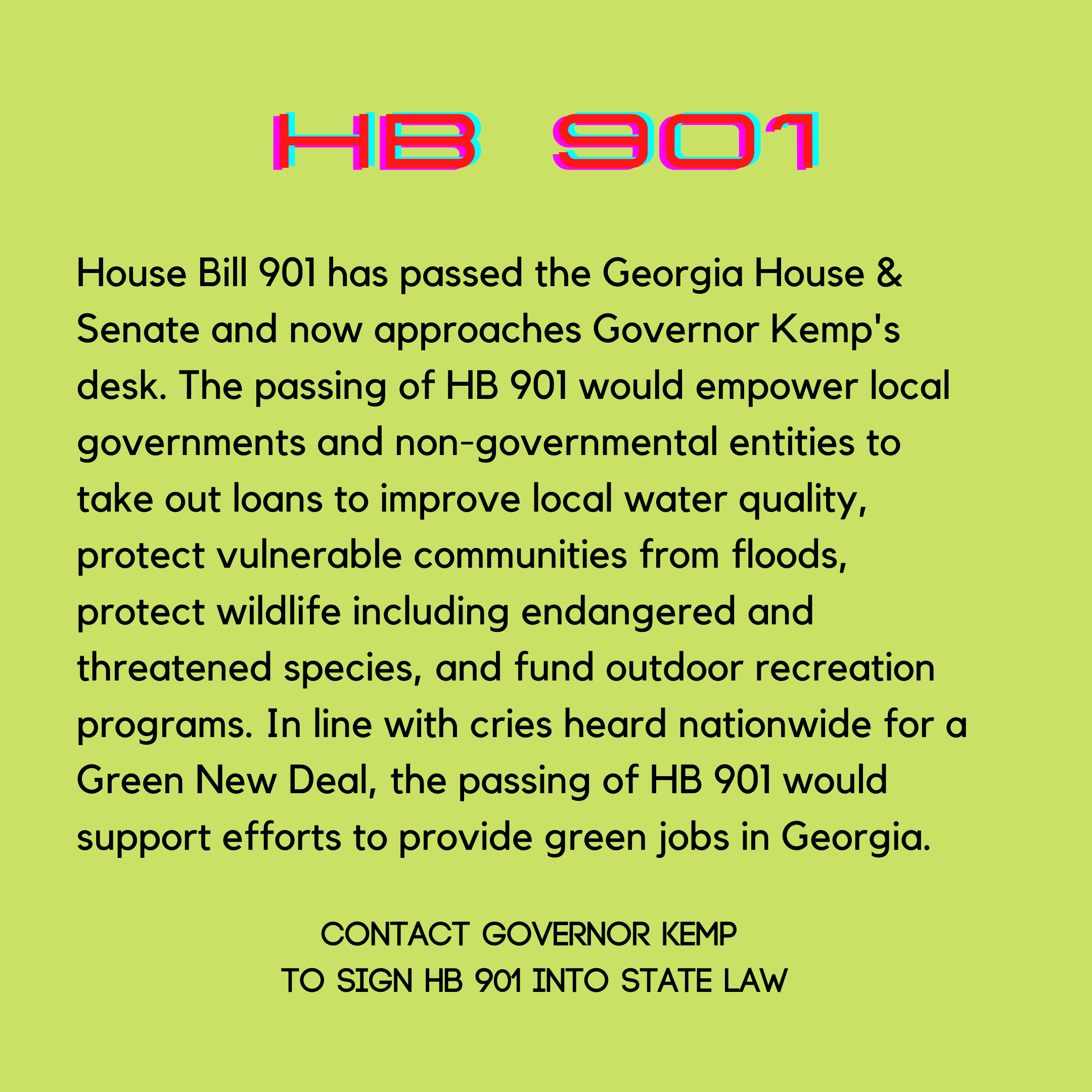
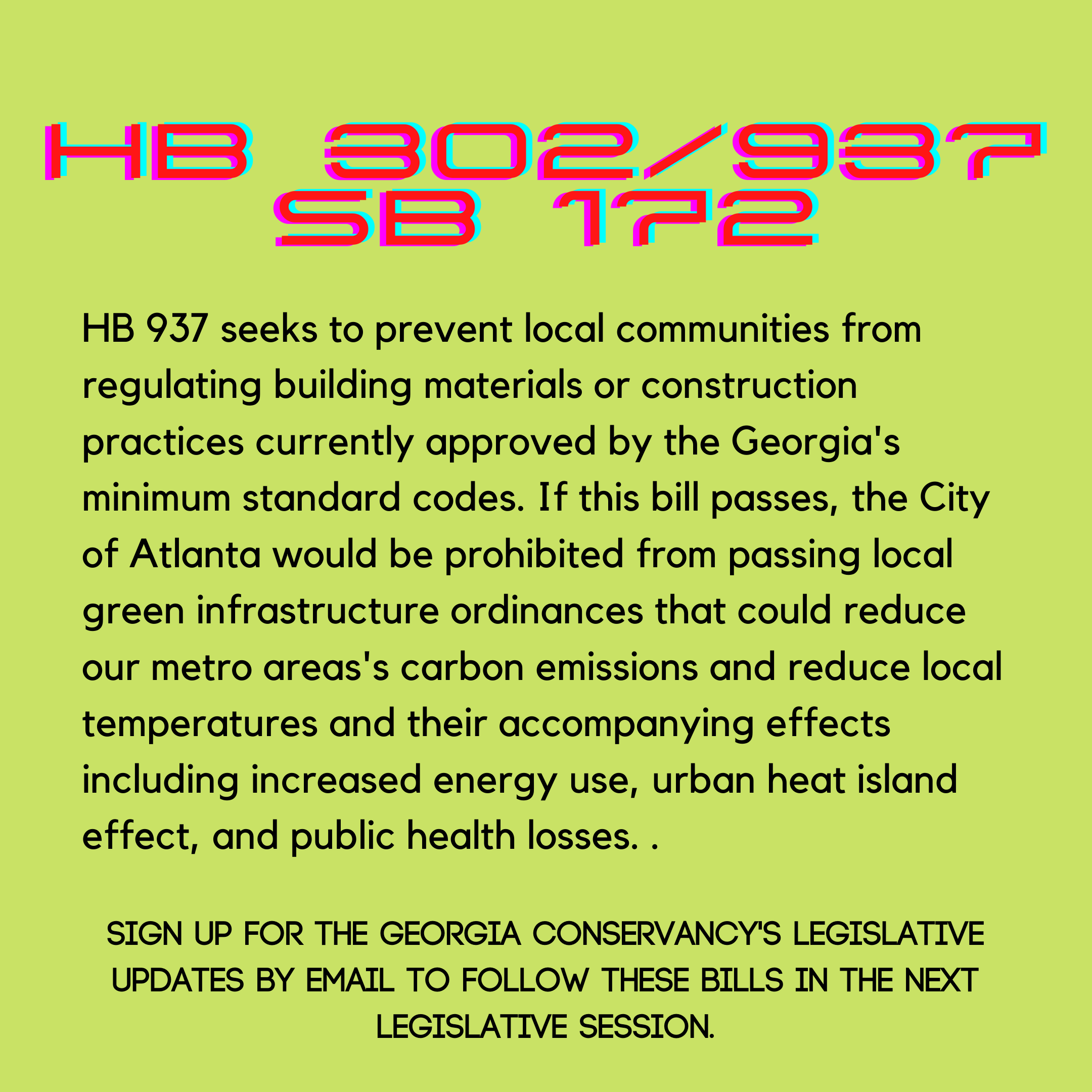
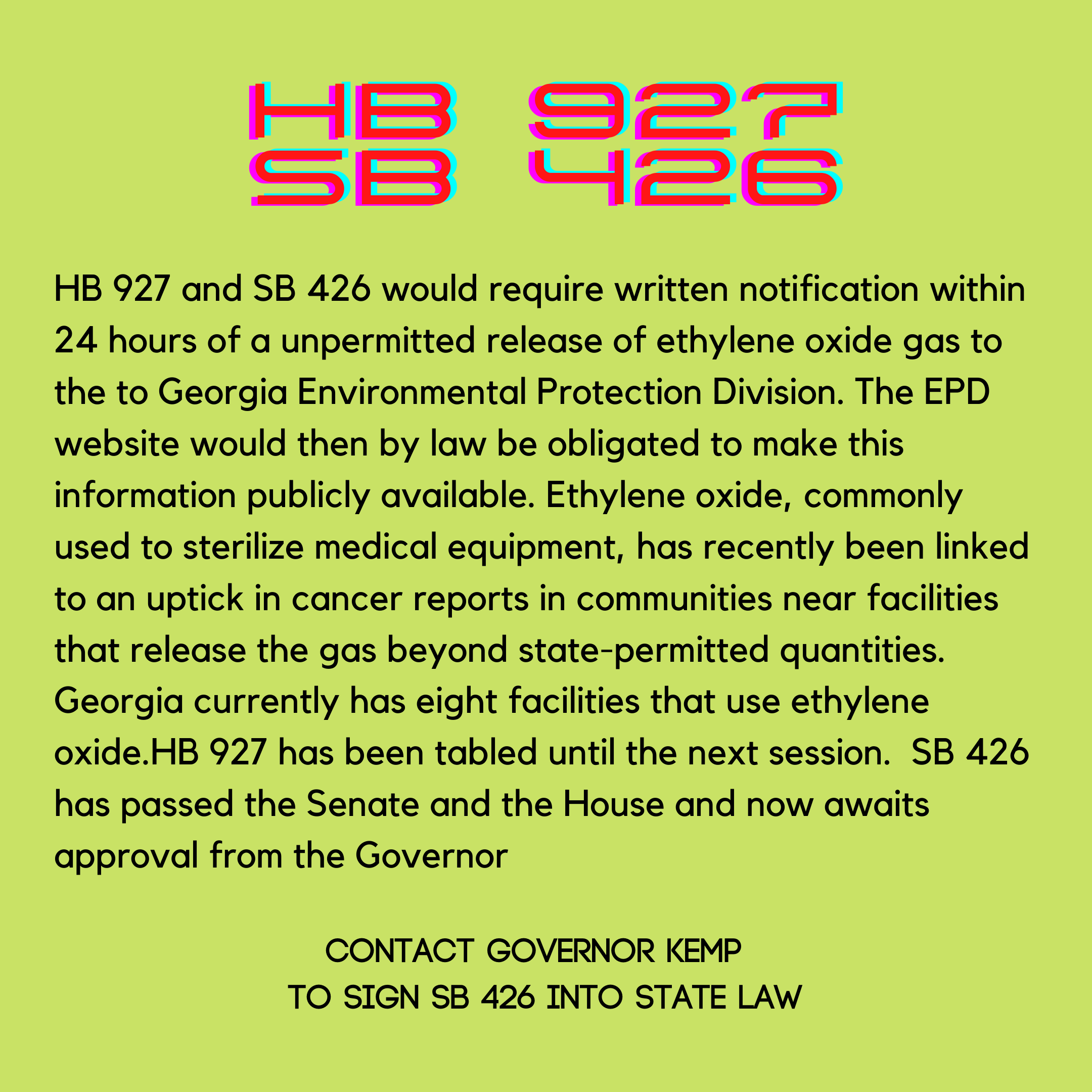


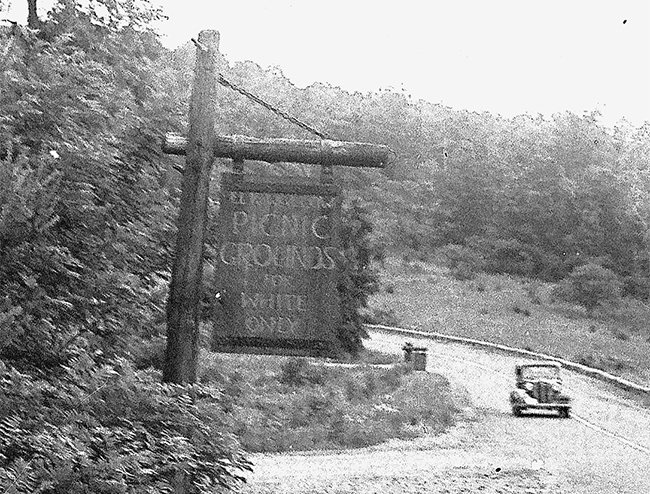





 Green ATLiens